
Introduction
Running has a funny way of changing your definition of success. Initially, you celebrate completing your first few kilometres. Then comes your first 10K, half marathon, marathon, and perhaps even an ultramarathon. What once seemed impossible gradually becomes part of your routine.
But somewhere along the journey, the excitement of running can turn into an obsession with improvement. We start chasing faster times, longer distances, higher weekly mileage, and better recovery scores. Even an enjoyable morning run can become disappointing because our smartwatch tells us we weren’t performing at our best.
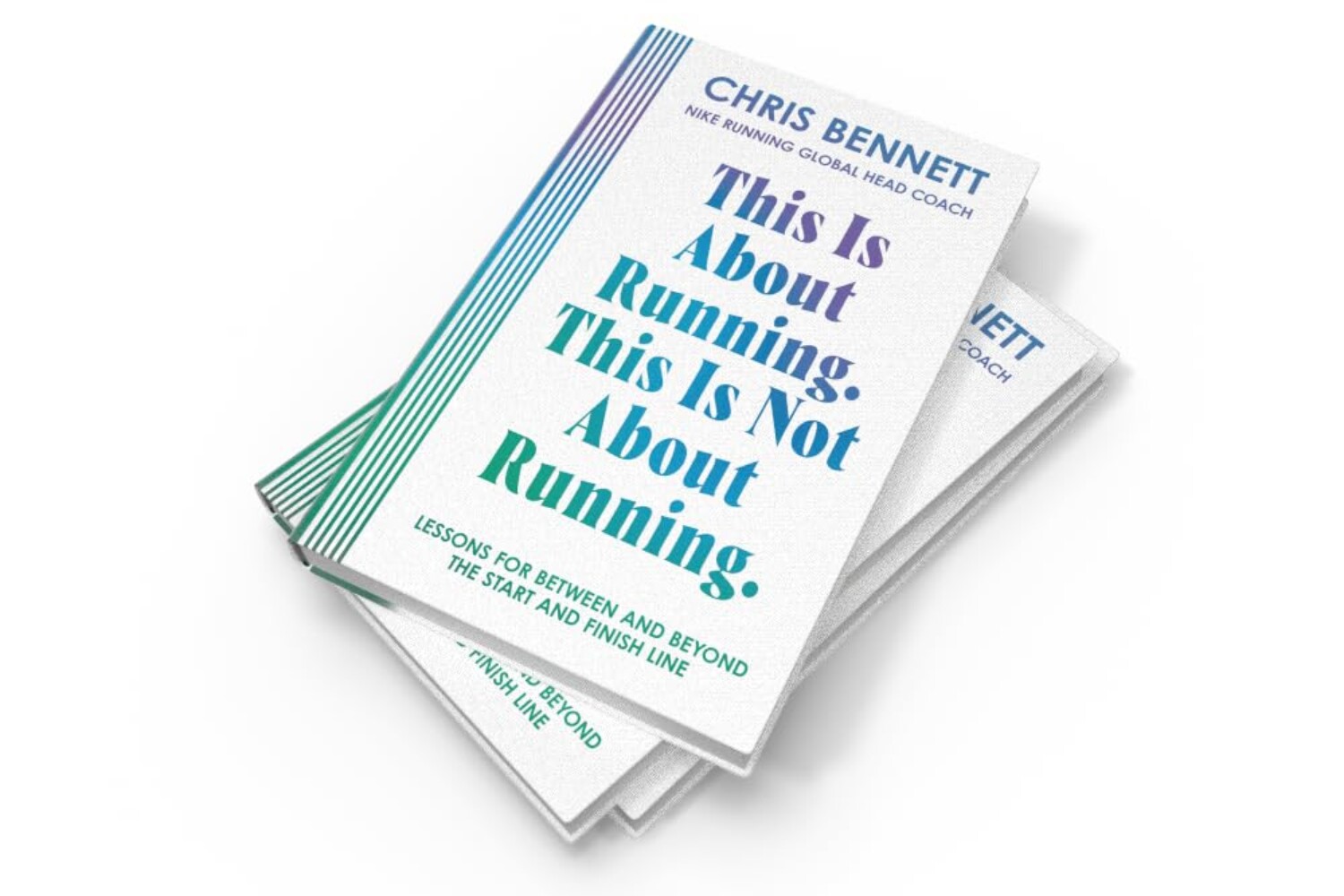
This Is About Running. This Is Not About Running. by Chris Bennett, Global Head Coach of Nike Running, offers a refreshing perspective on this relationship. Drawing on decades of experience as an athlete and coach, Bennett explores running through the lens of self-belief, patience, resilience, and personal growth.
What makes this book particularly relatable is that its philosophy applies equally to someone attempting their first kilometre and someone preparing for an ultramarathon. It is less concerned with how fast we move and more interested in what happens to us along the way.
And perhaps that’s why the title resonates so deeply. Sometimes, running isn’t really about running at all.
Rediscovering the Runner Within Us
Think about how we ran as children. Nobody needed to explain aerobic zones, running technique, or the benefits of cardiovascular exercise. We ran because it was fun. We chased friends, explored unfamiliar places, and enjoyed the freedom of movement.
Somewhere in adulthood, running became something we felt we had to do rather than something we wanted to do.
Bennett challenges the idea that we must achieve a certain level of fitness before considering ourselves runners. His approach to getting started is refreshingly simple: make the experience enjoyable enough that you want to do it again.
I find this idea relevant far beyond sports. We often make new beginnings unnecessarily complicated. We spend so much time preparing, researching, purchasing equipment, and waiting for ideal circumstances that we delay the experience itself.
Whether it’s running, learning a new skill, or pursuing an entrepreneurial idea, the first attempt doesn’t have to be extraordinary. It simply needs to create enough momentum for the next one.
 Become Your Own Best Coach
 Become Your Own Best Coach
Imagine waking up after a difficult night, dealing with several demanding meetings, and discovering that your training plan requires an intense running session. Do you follow the schedule exactly, or adjust it according to how you’re feeling?
Bennett encourages runners to develop their own judgment rather than depend entirely on instructions from someone else.
Training plans provide structure, but they cannot fully account for the complexity of our lives. Sleep, stress, nutrition, work commitments, travel, and emotional well-being can all influence how we experience the same physical effort on different days.
As someone who enjoys using technology to understand running performance, I find this especially relevant. Garmin, Strava, and structured training applications provide valuable information, but they cannot experience what I am feeling.
There’s a difference between following a plan and understanding why the plan exists. Changing a session when circumstances demand it doesn’t necessarily reflect a lack of commitment. Sometimes it reflects better judgment.
The same principle applies to leadership. Frameworks, consultants, dashboards, and mentors can guide our decisions, but eventually we must develop enough self-awareness to make informed choices ourselves.
Give Every Run a Purpose, Not a Punishment
One of the unhealthy habits we sometimes develop is using exercise as punishment. We run because we ate too much, missed a previous workout, or feel guilty about not being productive enough.
Bennett encourages a more positive approach. A run can serve a physical, emotional, social, or personal purpose. Different sessions can contribute to speed, endurance, recovery, confidence, or simply enjoyment.
I particularly like the idea of running towards something meaningful rather than constantly trying to compensate for something we dislike about ourselves.
An easy morning run might provide mental clarity before a busy day. A challenging hill session might help develop confidence. A trail run might offer a much-needed connection with nature.
Not all of these benefits will appear in our performance statistics, but that doesn’t make them less valuable.
Motivation built entirely around dissatisfaction can become exhausting. It is much more sustainable to pursue improvement while appreciating who we already are.
Be Comfortable With Being Bad at Something
One of the more personal themes in the book is Bennett’s willingness to examine his own limitations as a competitive athlete.
We naturally enjoy activities in which we perform well. Runners may prefer their favourite distances or training sessions, just as professionals tend to gravitate towards tasks that reinforce their existing strengths.
But constantly doing what we’re already good at can limit our development.
For runners, this might mean acknowledging a weakness in pacing, strength, hill running, or recovery habits. For entrepreneurs, it could mean recognizing gaps in delegation, financial management, communication, or leadership.
Neither situation improves simply because we refuse to acknowledge the problem.
I’ve come to believe that confidence isn’t about convincing ourselves that we’re good at everything. It’s about being comfortable enough with our imperfections to work on them.
There is something liberating about admitting that we are still learning, even in areas where others may consider us experienced.
The Surprisingly Difficult Art of Running Easy
Ask an enthusiastic runner to complete a hard workout, and they will probably accept the challenge. Ask the same runner to slow down and maintain a genuinely easy effort, and you may encounter more resistance.
It sounds strange, but many ambitious people struggle with slowing down.
Bennett highlights the importance of easy running and recovery as essential parts of improvement. Training challenges the body, while sufficient recovery allows it to adapt. Constantly increasing effort without allowing adequate recovery can eventually work against our goals.
This is something I can relate to as both a runner and an entrepreneur. There is a temptation to treat every available hour as an opportunity to accomplish more. Rest can feel unproductive, especially when there are always more projects, targets, and personal ambitions waiting for attention.
But human beings are not machines designed to operate indefinitely at maximum capacity. Even our ability to make good decisions depends on recognising when we need to step back.
Learning to run easy requires a different kind of discipline from pushing through a difficult workout. It requires resisting the temptation to prove something when proving something isn’t the purpose of the session.
Sometimes the smartest way to move forward is to slow down.
Personal Bests Are Not the Only Measure of Progress
 Personal Bests Are Not the Only Measure of Progress
Every runner eventually encounters a period when improvement becomes less obvious. Personal records become harder to achieve, progress slows, and circumstances may interrupt training.
Bennett invites us to expand our definition of success. Instead of measuring achievement exclusively through time and distance, we can appreciate different kinds of milestones and experiences.
Perhaps your most memorable run was through a beautiful forest. Perhaps it was your first successful return after an injury, your most intelligently paced race, or the day you helped another runner reach the finish line.
None of these necessarily produces a personal best.
Yet each represents something worth celebrating.
Modern life encourages us to quantify almost everything. In business, we measure revenue, growth, profitability, and productivity. In running, we measure pace, distance, heart rate, cadence, and countless other variables.
These metrics are useful, but they don’t tell the complete story.
A slower run can represent better judgment. A smaller business decision can create greater long-term value. An apparently ordinary day can represent meaningful personal progress.
We need to become better at recognizing achievements that don’t immediately appear on a scoreboard.
Founder Field Note: The Lessons Between Two Finish Lines
Following my previous reflection on Christopher McDougall’s Born to Run, this book brings another dimension to my understanding of endurance.
Having progressed towards longer distances, completed the Galiyat Mountain Trail 40K, and challenged myself with a recent 50K effort, I increasingly appreciate how running evolves beyond its physical benefits.
Long-distance running gives me something that is often difficult to find in entrepreneurial life: uninterrupted time to think, reflect, and experience the present moment.
Managing technology businesses involves constant decisions, customer expectations, operational challenges, and emerging opportunities. There is rarely a moment when everything is complete.
Running offers a different environment. There is a route ahead, a rhythm to find, and an immediate responsibility to manage my own effort. On a mountain trail, I cannot negotiate the gradient or delegate the climb. I can only decide how to approach it.
What I find particularly meaningful about Bennett’s philosophy is that it challenges my tendency to keep raising the bar. Completing one milestone naturally creates excitement about the next, but I don’t want that ambition to prevent me from appreciating the progress already made.
I enjoy the technology, the training plans, the equipment, and the challenge of preparing for increasingly demanding events. But I also want to preserve the freedom, mental clarity, and genuine happiness that made running such an important part of my life.
The goal isn’t simply to keep running farther. It’s to keep enjoying the journey for many years to come.
Five Lessons Worth Carrying Beyond the Finish Line
 Five Lessons Worth Carrying Beyond the Finish Line
- Start before you feel completely ready. Confidence often develops through action rather than preparation alone.
- Develop your own judgment. Use technology, data, and advice without losing touch with your own experience.
- Pursue positive goals. Improve because you value yourself, not because you are dissatisfied with everything you are.
- Respect recovery. Sustainable progress requires periods of reduced effort, reflection, and adaptation.
- Celebrate small victories. Not every meaningful achievement needs an audience, a medal, or a measurable record.
Conclusion
This Is About Running. This Is Not About Running. is ultimately a book about our relationship with ourselves.
Chris Bennett uses running to explore how we respond to uncertainty, handle disappointment, pursue improvement, and learn to recognize our own progress. His coaching philosophy reminds us that ambition and self-compassion can coexist.
We can challenge ourselves without constantly criticizing ourselves. We can pursue difficult goals while respecting our limitations. We can take our ambitions seriously without forgetting to enjoy the experience.
Whether we are building a business, preparing for an ultramarathon, learning something new, or simply navigating everyday life, there will always be another starting line ahead.
Perhaps success isn’t only about how many finish lines we cross. Perhaps it’s also about becoming someone who still looks forward to the next starting line.
Am I so focused on becoming better tomorrow that I’ve forgotten to appreciate how far I’ve already come today?