
Introduction
Every founder makes plans. We plan products, teams, customer pipelines, financial targets, market entry, regulatory readiness, partnerships, hiring, technology roadmaps, and personal milestones. Planning gives structure to ambition. It creates direction. It helps us move from imagination to execution.
But life and business do not always respect our plans.
A customer delays. A major project fails. A regulation changes. A partnership breaks. A key employee leaves. A product does not perform as expected. A family situation demands attention. Health changes. Market timing shifts. A carefully built assumption suddenly becomes weak. The founder wakes up one day and realizes that the old plan no longer fits the new reality.
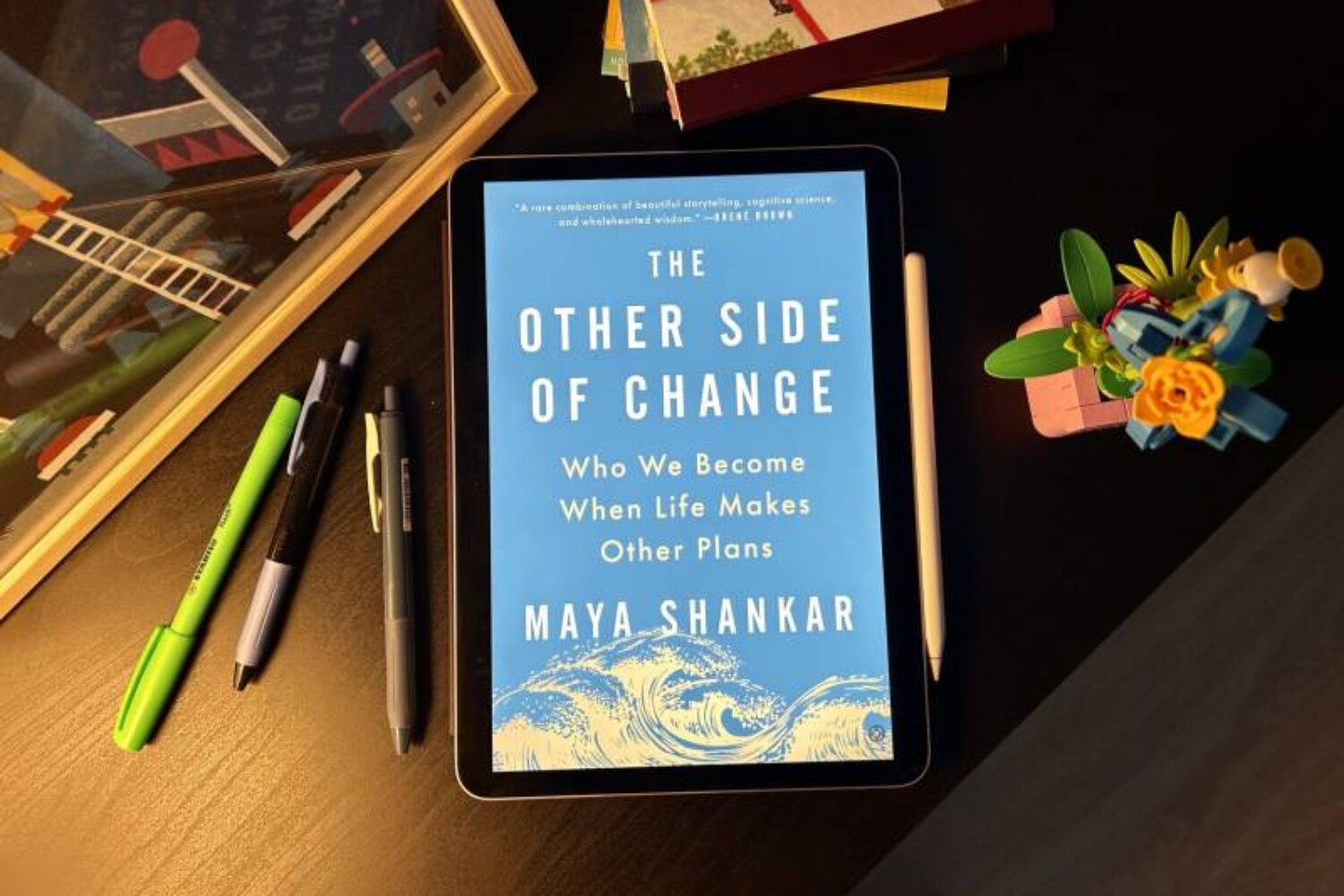
The Other Side of Change by Maya Shankar is important because it does not treat change as a motivational slogan. It looks at the psychological reality of disruption. Change is not only about adjusting a strategy. It can affect identity, confidence, relationships, values, and the story we tell ourselves about the future.
For founders, this matters deeply. Entrepreneurship is full of unwanted change. Some changes are visible and public. Others are private and emotional. The founder may appear composed from the outside while internally processing disappointment, uncertainty, fear, shame, grief, or the loss of an imagined future.
In founder-led companies like ZAUQ Group, PHARMA TRAX, FOOD TRAX, and related ventures, change is not theoretical. We work in markets shaped by technology, compliance, customer maturity, regulatory timelines, supply chain realities, AI adoption, and execution pressure. A founder must therefore learn not only how to create change, but also how to survive and rebuild when change arrives uninvited.
The central lesson from The Other Side of Change is simple: when life makes other plans, the real question is not only what happened to us. The deeper question is who we can become on the other side of it.

Summary and Detailed Insights
The Other Side of Change explores how people rebuild after sudden, unwanted turning points. The book uses real human stories and behavioral science to show that disruption is not only an external event. It creates internal shock. It can change how we see ourselves, what we believe is possible, what we value, and how we relate to other people.
The book’s key themes include denial, possible selves, psychological distance, attachment after loss, belief change, self-compassion, shame, and community. These ideas are highly relevant for founders because business change often triggers the same inner patterns. When something goes wrong, we may deny the full impact for a while. We may cling to an old version of the company, the team, or ourselves. We may spiral mentally and replay the same worry again and again. We may isolate ourselves out of shame. We may resist asking for help because it feels like weakness.
But the book also offers a more hopeful view. Change can be destabilizing, but it can also reveal new strength. A major disruption can close one identity, but it can also open a new one. A setback can narrow our thinking for a while, but distance and reflection can expand perspective. Shame can isolate us, but self-compassion and community can bring us back into movement.
For founders, this is not soft psychology. It is practical leadership. A founder who cannot process change maturely may become reactive, defensive, rigid, or emotionally exhausted. A founder who learns to work through change can rebuild with more clarity, humility, and resilience.
Denial Can Be a Temporary Bridge, but Not a Permanent Home
One of the useful insights from the book is that denial is not always useless. In the early shock of change, denial can sometimes help a person stay steady long enough to function. It can create a temporary emotional bridge when the full reality feels too painful to absorb at once.
Founders experience this too. When a project fails, a customer relationship weakens, a cash flow issue appears, or a strategic bet does not move as expected, the first reaction may be to minimize it. We may tell ourselves it is not serious. We may focus only on the most optimistic interpretation. We may avoid the deeper implications because accepting them too quickly feels threatening.
In the short term, this may protect emotional stability. But denial becomes dangerous when it prevents the founder from adapting. If the founder keeps insisting that the old plan will still work when reality has changed, the company loses time. If the founder refuses to admit that the market is not ready, the team is not aligned, or the product needs redesign, the problem becomes more expensive.
The mature founder does not need to rush into panic. But he also cannot live permanently in denial. The transition must move from emotional protection to honest assessment. The question becomes: what has actually changed, and what must now change in us?
 Change Threatens Identity, Not Only Plans
 Change Threatens Identity, Not Only Plans
A major change hurts more when it threatens identity. A founder is not only attached to a plan. He is often attached to what the plan means about him. The business may represent competence, courage, vision, status, independence, contribution, family pride, or personal worth.
This is why setbacks can feel so personal. A failed product may feel like a judgment on the founder’s intelligence. A lost customer may feel like rejection. A delayed market may feel like proof that the founder misread the future. A team problem may feel like a failure of leadership. A financial strain may feel like shame.
But when identity becomes too tightly attached to one outcome, change becomes harder to survive. The founder may defend the old direction not because it is still right, but because letting it go feels like losing part of himself.
This is where the book’s message is powerful. A stronger identity is built around values, not only outcomes. If a founder’s identity is grounded only in winning, every loss becomes dangerous. If identity is grounded in learning, responsibility, contribution, trust, and courage, then even painful change can be integrated into growth.
A founder should not ask only, “How do I protect the old version of myself?” He should ask, “What values remain true even if the plan has changed?”
New Possible Selves
Change can close one future, but it can also reveal other possible selves. This is one of the most useful founder lessons from the book. When a disruption happens, our mind often becomes narrow. We focus on what has been lost. We compare everything to the previous plan. We feel that if the original future is gone, the future itself has become smaller.
But that is not always true. Sometimes the future has not ended. It has changed shape.
A founder who loses one opportunity may discover a better customer segment. A product delay may force a stronger architecture. A failed partnership may push the company toward more independence. A market setback may reveal the need for education-led thought leadership. A personal health warning may force a better leadership rhythm. A crisis may reveal people in the team who are ready for greater responsibility.
New possible selves do not appear immediately. They often emerge through action, reflection, conversations, and small experiments. The founder must remain open enough to notice them.
This is very relevant in businesses shaped by regulation and technology. A founder may begin with one version of the market, but the market may mature differently. Customers may respond differently. Compliance timelines may change. AI may change workflows. New opportunities may appear where the old plan did not expect them.
The founder who clings only to the original identity may miss the new possibility. The founder who stays open can rebuild around a better version of the future.
Psychological Distance Helps Break the Spiral
When change hits, the mind can spiral. It replays the mistake, the loss, the conversation, the missed signal, the possible consequences, and the imagined future. The founder may think he is analyzing, but often he is only circling the same fear.
The book highlights the value of creating distance from spiraling thoughts. This is extremely practical for founders because business pressure can easily become mental overwork. We replay customer conversations. We imagine worst-case scenarios. We question our judgment. We think about what people will say. We create long internal arguments with people who are not even present.
Distance does not mean ignoring reality. It means changing the perspective enough to think more clearly. A founder can ask: how will this look six months from now? What would I advise another founder in this situation? What are the facts and what are the stories? What is the next responsible action? What information do I need before deciding? What is within my control today?
This shift matters because rumination consumes energy without producing movement. Reflection produces learning. Rumination repeats pain. The founder must learn the difference.
A clear mind is not created by thinking more. Sometimes it is created by stepping back.
Attachment, Loss, and Letting the Old Plan Soften
 Attachment, Loss, and Letting the Old Plan Soften
Change often involves loss. Not only the loss of money, opportunity, or time, but the loss of an imagined future. Founders may grieve a business version that never fully happened. A market that did not mature on time. A team that did not become what they hoped. A partnership that could not carry the dream. A personal season that passed too quickly under pressure.
This kind of loss is rarely acknowledged in business language. We quickly use words like pivot, reset, restructure, or optimize. These words are useful, but they can hide the emotional reality. Sometimes the founder is not only changing strategy. He is letting go of an attachment.
The book’s discussion of attachment after loss is relevant here. After disruption, people can become hardened. They may protect themselves by becoming less trusting, less hopeful, less open, or more controlling. Founders can do the same. After being disappointed, a founder may stop trusting team members. After a customer betrays trust, he may become suspicious of all customers. After a failed idea, he may become reluctant to dream again.
But healing requires allowing attachment to soften again with care. This does not mean becoming naïve. It means not allowing one painful change to close the founder’s ability to trust, build, and hope.
A mature founder learns from loss without allowing loss to define the whole future.
Change Can Rewrite Beliefs
Major change can expose beliefs we did not know we were carrying. We may discover that we believed success should be linear. We believed loyalty would always be returned. We believed hard work would always produce timely results. We believed customers would immediately understand value. We believed the team would grow at the same speed as the founder’s ambition. We believed life would give us enough time for business, family, health, faith, and personal renewal without forcing hard choices.
When these beliefs are challenged, the founder may feel shaken. But this can also become a moment of maturity. The goal is not to become cynical. The goal is to update beliefs so they are closer to reality.
A better belief may be: good work still requires timing, education, and trust-building. People need systems, not only motivation. Markets mature unevenly. Health cannot be postponed forever. Delegation needs structure. Change requires emotional processing, not only strategy. A founder must keep learning even when he has experience.
Belief change is difficult because old beliefs may have helped us survive earlier stages. But what helped in one season may limit the next one. The founder must remain humble enough to update his internal operating system.
Self-Compassion and Community Loosen Shame
When plans break, shame often appears. The founder may ask: how did I not see this? Why did I trust the wrong person? Why did I delay the decision? Why did I overpromise? Why did I let this happen? What will people think?
Shame isolates. It tells the founder to hide, withdraw, defend, or pretend. But hidden shame weakens leadership because it blocks learning and connection.
Self-compassion is not an excuse. It does not remove responsibility. It creates enough emotional safety to face reality without destroying the self. A founder can say: this happened, it hurts, I must learn from it, and I am still capable of rebuilding.
Community also matters. Founders need people with whom they can speak honestly without performing strength all the time. This may include mentors, trusted friends, founder peers, family, advisors, or inner circles where truth can be shared safely. A founder who carries every disruption alone may appear strong, but isolation makes change heavier.
The lesson is clear: resilience is not always individual. Sometimes resilience comes from being held by the right people while rebuilding the next version of oneself.
Founder Field Note
As a founder, I can relate to the reality that business life does not always follow the plan. There are moments when the strategy is clear, the ambition is strong, and the team is moving. Then something changes. A customer delays. A regulatory timeline shifts. A project becomes heavier than expected. A team member disappoints. A market does not respond with the urgency we expected. A personal responsibility interrupts business flow.
In ZAUQ Group, PHARMA TRAX, FOOD TRAX, and related ventures, change is part of the work. We are building in sectors where trust, compliance, automation, traceability, food safety, pharmaceutical serialization, AI adoption, and customer education all interact with uncertainty. The founder must therefore become skilled at rebuilding.
This book reminds me that adaptation is not only operational. It is emotional and psychological. When plans change, I must not only ask what the company should do next. I must also ask what version of myself is being required now.
Does this moment require more patience? More humility? More courage? More delegation? More emotional honesty? More strategic focus? More openness to a new possible future?
The other side of change is not reached by pretending the change did not hurt. It is reached by facing the truth, loosening old attachments, accepting new realities, and continuing to build with values intact.
Practical Founder Insight
The most useful founder lesson from The Other Side of Change is that change should be processed before it is simply acted upon. Founders are action-oriented by nature. When something goes wrong, we immediately want to fix, decide, respond, restructure, call, explain, or move forward. Action matters, but unprocessed change can lead to reactive decisions.
A founder needs a rhythm for processing disruption. What changed? What did I lose? What am I afraid this means? What old identity is being challenged? What new possibility may be emerging? What belief needs updating? Who should I speak to honestly? What is the next wise step?
This kind of reflection does not slow leadership. It improves it. A founder who processes change clearly will act with more maturity. He will be less defensive, less impulsive, and less trapped by the old plan.
In business, resilience is not only the ability to endure. It is the ability to rebuild identity, meaning, and direction when circumstances change.
How to Apply The Other Side of Change Today
Name What Actually Changed
When disruption happens, do not speak only in general terms. Name the specific change. Was it a customer change, market change, team change, financial change, personal change, or identity change? Clear naming reduces emotional fog and makes better action possible.
Notice Where Denial Is Protecting You
Ask whether you are using optimism wisely or avoiding reality. Denial may help in the first shock, but it should not prevent adaptation. Look for facts that you may be resisting because they require a difficult decision.
Separate Identity From Outcome
A failed plan does not mean a failed founder. A lost opportunity does not mean lost capability. Anchor identity in values such as learning, trust, courage, responsibility, and contribution rather than one narrow outcome.
Explore New Possible Selves
Ask what new version of the company, the role, or the founder may now be possible. A changed plan may reveal a stronger direction, but only if you are willing to look beyond the old map.
Create Distance From Rumination
When thoughts begin to spiral, step back. Write the facts. Ask what advice you would give another founder. Identify the next responsible action. Reflection should lead to learning, not endless mental repetition.
Allow Loss Without Becoming Hardened
Acknowledge what was lost. A missed opportunity, broken trust, failed idea, or delayed dream can hurt. Learn from it, but do not let it close your ability to trust, build, and hope again.
Use Community to Loosen Shame
Do not carry every disruption alone. Speak with people who can hold the truth without judgment and help you think clearly. The right community does not remove responsibility; it strengthens the capacity to face it.
Key Ideas
 Key Ideas
• Major change affects identity, not only plans.
• Denial can steady us temporarily, but it becomes harmful when it blocks adaptation.
• Founders must separate self-worth from specific outcomes.
• New possible futures can emerge after old plans break.
• Psychological distance helps turn rumination into clearer thinking.
• Loss can harden us unless we process it with care.
• Change can reveal and rewrite old beliefs.
• Self-compassion is not an excuse; it creates the emotional safety needed for honest learning.
• Community helps founders move through shame and uncertainty.
• Resilience is not only endurance; it is the ability to rebuild meaning and identity after disruption.
• The other side of change requires both operational action and emotional maturity.
Conclusion
The Other Side of Change is a reminder that change is not only something we manage. It is something that remakes us.
For founders, this is especially important. Business will not always follow the planned path. Customers will change. Markets will shift. Teams will evolve. Regulations will move. Technologies will disrupt. Personal life will intervene. Some dreams will need to be redesigned. Some old versions of ourselves will need to be released.
The founder’s work is not to avoid all disruption. That is impossible. The work is to meet disruption with honesty, courage, reflection, and values.
When plans break, we can become rigid, ashamed, and defensive. Or we can become more aware, more adaptive, more compassionate, and more deeply aligned with what matters.
The other side of change is not automatic. It is built through acceptance, learning, support, and the willingness to become someone new without losing the values that matter most.
The question I am taking from this book is simple: when life or business changes my plan, am I only trying to return to the old version, or am I willing to discover who I can become next?