
Introduction
Think about the last time you were waiting at an airport, sitting on a train, or standing in a queue. Chances are, you were surrounded by people you had never met. And like most of us, you probably reached for your phone rather than starting a conversation.
It’s interesting how connected we’ve become digitally, yet how easily we avoid connecting with the person standing next to us.
We attend conferences to meet people, join professional communities to expand our networks, and spend hours building relationships online. But when an opportunity for a spontaneous conversation appears, we often hesitate. We assume the other person is busy, uninterested, or simply doesn’t want to be disturbed.
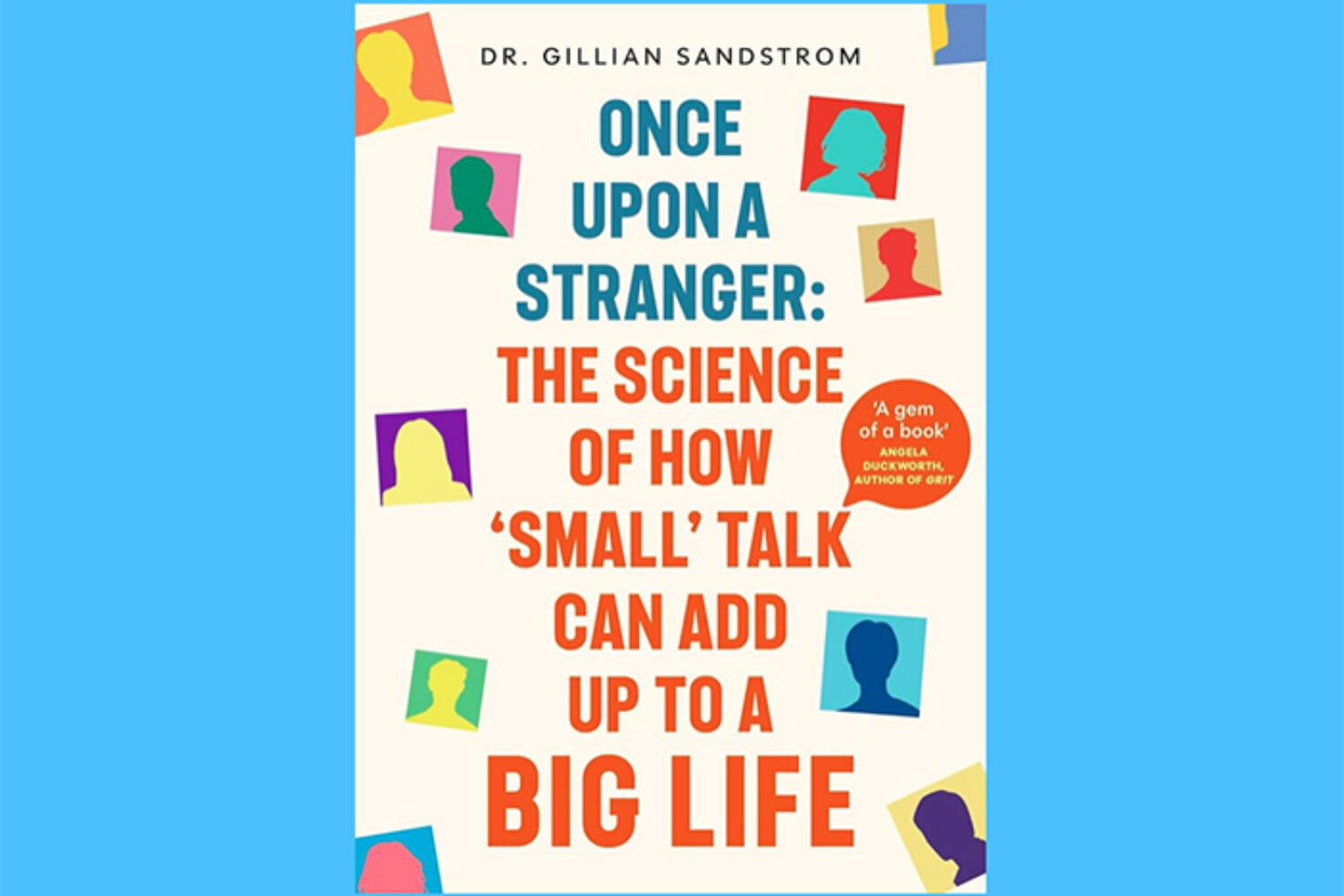
Once Upon a Stranger: The Science of How Small Talk Can Add Up to a Big Life by Dr. Gillian Sandstrom challenges these assumptions. Drawing on her research in social psychology and her own experiences, Sandstrom makes a fascinating case for something remarkably simple: talking to people we don’t know can make our lives happier, more interesting, and sometimes unexpectedly different.
What I particularly enjoyed about this book is that it doesn’t turn every interaction into a networking opportunity. It reminds us that human connection has value even when there is nothing to gain.
We Are Often More Afraid of Awkwardness Than We Need to Be
One of the most interesting ideas in the book is the liking gap: our tendency to underestimate how much other people enjoyed talking to us.
We’ve all experienced it. After meeting someone new, we replay the conversation in our minds. Perhaps we talked too much, said something awkward, or failed to ask an interesting question. We begin wondering what the other person thought of us.
Meanwhile, that person may have walked away thinking it was a perfectly pleasant conversation.
Sandstrom explains how our fear of rejection and embarrassment often prevents interactions that might turn out better than expected. We focus so much on the possibility of an uncomfortable moment that we overlook the possibility of an enjoyable one.
The encouraging lesson is that we don’t need to become brilliant conversationalists. A genuine question, an observation about something happening around us, or a little curiosity can be enough.
And if someone isn’t interested in talking, that’s perfectly fine too. The point isn’t to force conversations. It’s to stop assuming rejection before we’ve even tried.
 Small Talk Isn’t Always Small
 Small Talk Isn’t Always Small
I used to think of small talk primarily as a way to begin a more serious conversation. Sandstrom offers a different perspective: the small interaction itself can be meaningful.
One of her experiences illustrates this beautifully. While studying at university after changing careers, she regularly passed a woman working at a hot dog stand. One day, the woman smiled and waved at her. Sandstrom waved back.
Nothing more happened. They didn’t exchange names or become friends, and Sandstrom never even bought a hot dog from her.
Yet that simple acknowledgement made the campus feel more welcoming. Someone had noticed her. She felt a little more connected to a place where she was still finding her feet.
Sandstrom later explored a similar idea through a coffee shop study. Customers who briefly chatted with the barista reported a better mood and a stronger feeling of connection than those who completed the transaction without social interaction.
These findings made me think about the ordinary people who become part of our routines: the person at a café, a familiar face on our morning walk, a security guard, or someone we see regularly without knowing their name.
We may not think of these people as part of our social circle, but even a little recognition can make everyday life feel less anonymous.
Sometimes a Stranger Has the Missing Piece
The book also includes some remarkable stories about encounters that led to much bigger changes.
Sandstrom shares how, during a difficult period in her life, she met a stranger named Floyd while visiting a memorial tower at sunset. A question about the book he was reading turned into a conversation and eventually a long hike together.
They never met again, but the encounter stayed with her.
Another story comes from a visit to a lawyer. Sandstrom discovered that the lawyer had entered the legal profession later in life. At the time, Sandstrom was questioning her own career in computer programming. Hearing about someone else’s unconventional career path helped her imagine possibilities she had not seriously considered.
This eventually became part of her journey toward psychology.
What strikes me about these stories is their unpredictability. Neither conversation began with a clear objective. Sandstrom wasn’t looking for a mentor, a professional contact, or career advice. She was simply curious.
I think this is particularly relevant to entrepreneurship.
Founders are encouraged to build networks strategically, identify valuable connections, and seek people who can help their businesses grow. That approach has its place, but it can also limit us to familiar industries and predictable conversations.
Sometimes the most useful perspective comes from someone who knows nothing about our business.
A conversation with a teacher, traveler, researcher, technician, or entrepreneur from an entirely different field may challenge an assumption we’ve carried for years. We cannot know in advance who might introduce us to an idea worth exploring.
And sometimes the conversation won’t lead anywhere beyond an enjoyable moment. That doesn’t make it a waste of time.
The Problem With Treating Every Conversation as Networking
 The Problem With Treating Every Conversation as Networking
There’s a distinction I think we often overlook in professional life: connecting with people and networking are not exactly the same thing.
Networking usually has some intention behind it. We meet potential customers, partners, suppliers, mentors, and industry colleagues because we hope to develop relationships that may eventually create opportunities.
Human connection doesn’t always need that agenda.
At a conference, we might be so focused on meeting the right people that we overlook an interesting conversation with someone outside our target audience. At an exhibition, we may judge interactions by whether they produce a lead. At a business event, we may spend more time thinking about whom to meet next than listening to the person in front of us.
Sandstrom’s book made me reconsider that habit.
When every interaction is evaluated through its potential return, we miss much of what makes meeting people enjoyable. Curiosity becomes a technique rather than a genuine interest in another human being.
There’s nothing wrong with building a professional network. But perhaps the best connections begin when we stop treating everyone as a potential opportunity.
Have Our Phones Made Strangers Invisible?
One of the book’s most relevant themes is how modern routines have changed our everyday interactions.
We can now order coffee, book transport, pay bills, find directions, and communicate with colleagues without speaking to another person. These conveniences have improved daily life in many ways, and I wouldn’t suggest giving them up.
But they have also made it easier to move through the world without noticing the people around us.
The phone is particularly interesting. It fills almost every empty moment. A few minutes waiting for a meeting, sitting in a lobby, or traveling between destinations can disappear into messages, news, or social media.
There’s nothing inherently wrong with that. But I wonder how many interesting observations and conversations we miss because our attention is constantly elsewhere.
Sandstrom’s message isn’t that we should approach everyone or abandon privacy. It’s that we might benefit from occasionally looking up, observing the world, and being open to a friendly exchange.
Even introverts can benefit from this. The book challenges the assumption that enjoying solitude means being unable to enjoy conversations with unfamiliar people.
We don’t have to talk to everyone. We can simply become a little more open to the moments when a conversation feels natural.
Founder Field Note: Curiosity Beyond the Business Card
As I reflected on this book, I thought about how much of my professional journey has involved meeting people from different industries, backgrounds, and experiences.
Through ZAUQ Group, PHARMA TRAX, FOOD TRAX, and various professional communities, conferences and exhibitions have become a regular part of my work. These environments bring together people from technology, healthcare, manufacturing, research, government, and entrepreneurship.
Naturally, many conversations are business-oriented. We discuss technology, regulations, market opportunities, customer challenges, and potential collaborations.
But some of the most interesting learning can happen outside the formal agenda.
I believe founders benefit enormously from being curious about people beyond their immediate professional circles. Someone working in a completely different field may have encountered a problem similar to ours, approached a challenge differently, or developed a perspective we haven’t considered.
It also reminds me of a simpler responsibility in leadership: making people feel acknowledged.
A quick greeting, remembering someone’s earlier conversation, or taking a genuine interest in a colleague’s experience may appear insignificant next to major strategic decisions. Yet these everyday interactions contribute to the atmosphere and relationships within an organization.
Not everything important appears on a dashboard.
One of the most valuable lessons I take from Once Upon a Stranger is that we should make room for conversations without needing to justify them through business outcomes.
A Small Experiment Worth Trying
 A Small Experiment Worth Trying
Sandstrom’s ideas don’t require a complicated personal development program. They can be tested in ordinary life.
The next time you’re waiting for a flight, attending an event, or standing beside someone in a comfortable social setting, notice whether there is an opportunity for a brief, respectful conversation. Ask a natural question about something you both can see or experience. Listen to the response and let the interaction develop if the other person seems interested.
Don’t worry about sounding impressive. Don’t immediately reach for a business card. And don’t evaluate the conversation by whether it produces anything useful.
Simply see what happens.
Perhaps you’ll learn something interesting, discover a shared experience, or leave feeling a little more connected. Perhaps nothing memorable will happen at all.
Either way, you’ll have practiced a skill that our increasingly digital routines sometimes allow us to neglect.
Conclusion
Once Upon a Stranger is a refreshing reminder that a richer life doesn’t always require bigger achievements, extraordinary experiences, or carefully planned relationships.
Sometimes it requires being a little more present with the people already around us.
We may never see most of the strangers we encounter again. A few conversations might become friendships, some may introduce unexpected possibilities, and many will remain brief moments of shared humanity.
That is enough.
For founders, I think there’s an especially valuable lesson here. We spend considerable time searching for opportunities, knowledge, and meaningful relationships. Occasionally, we might find something worthwhile simply by setting aside our agenda and becoming curious about another person.
The question I’m taking from this book is simple: How many interesting people and unexpected perspectives am I missing because I’m too busy to say hello?