
Introduction
Have you ever woken up feeling perfectly fine, checked your smartwatch, and discovered that apparently you didn’t sleep very well?
Suddenly, you’re questioning how tired you actually feel. Your deep sleep was below target, your recovery score wasn’t impressive, and the device has already suggested that today might not be your best day.
Just a few minutes earlier, you hadn’t even thought about having a bad night.
It’s strange how something as natural as sleeping has become another performance indicator we feel compelled to optimize.
We monitor our heart rate, sleep stages, bedtime consistency, room temperature, caffeine intake, and recovery scores. We buy supplements, experiment with evening routines, and search for the latest science-backed sleep hack.
And yet, despite having more information and technology than ever before, many people remain frustrated with their sleep.
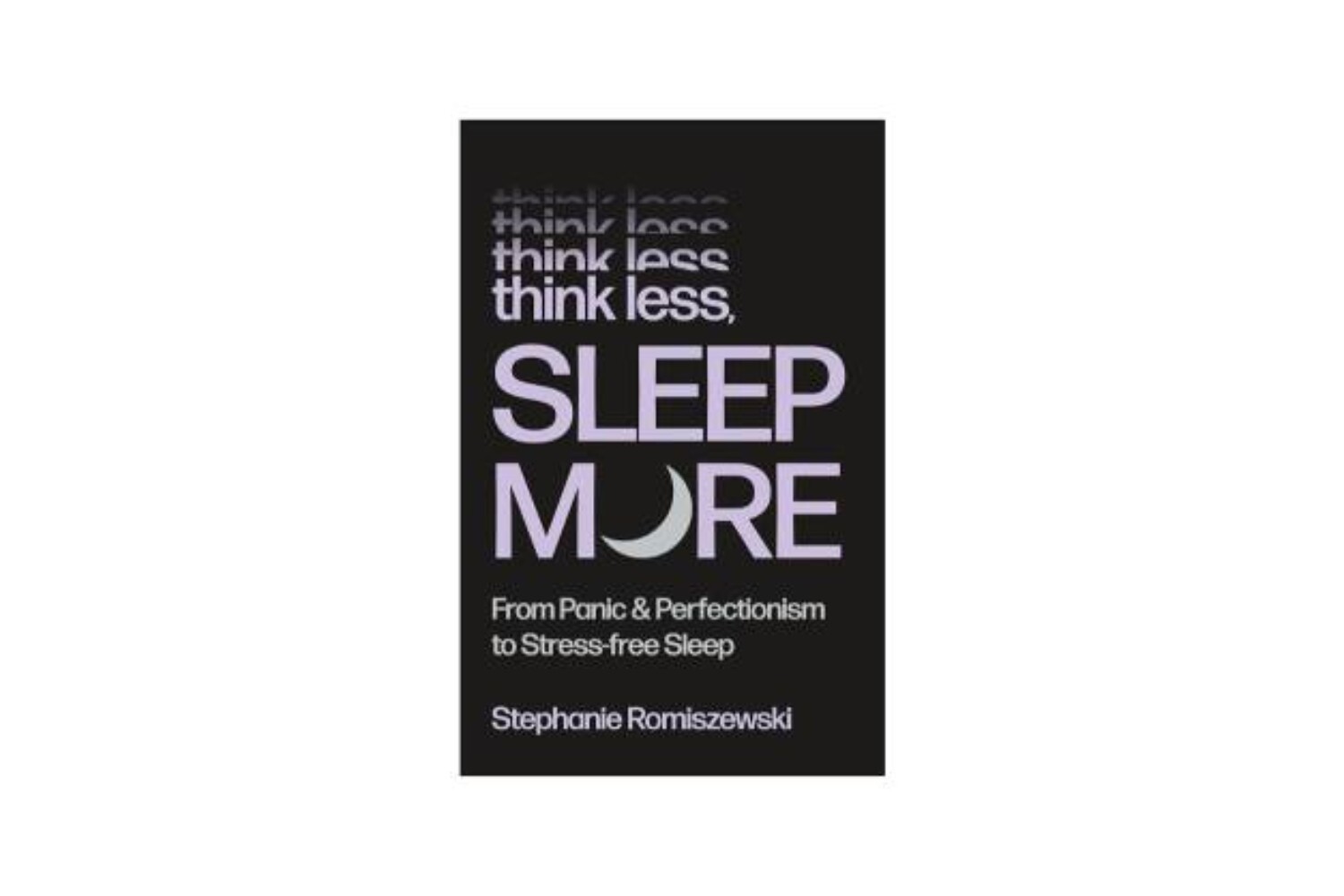
Think Less, Sleep More: From Panic & Perfectionism to Stress-Free Sleep by sleep physiologist Stephanie Romiszewski offers a refreshing perspective on this problem.
Rather than introducing another complicated sleep protocol, she questions whether our obsession with perfect sleep has become part of the difficulty.
Her central argument is surprisingly simple: sleep is a natural biological process, not another task we need to perform perfectly.
As someone who enjoys technology, performance tracking, running, and continuous improvement, I found this perspective particularly interesting.
What if the problem isn’t that we’re doing too little to improve our sleep, but that we’re thinking about it far too much?
 When Sleep Became Another Performance Target
 When Sleep Became Another Performance Target
For most of human history, people didn’t evaluate their nights through charts, scores, or sleep-stage percentages.
Sleep was influenced by daylight, the environment, daily activities, and social routines. Historical accounts suggest that sleeping patterns could vary considerably, including periods of wakefulness during the night.
Romiszewski examines how artificial lighting, industrialization, structured working hours, and modern expectations gradually changed our relationship with sleep.
Today, we’re surrounded by messages about what perfect sleep should look like.
Go to bed at exactly the same time. Avoid every screen. Finish dinner early. Maintain the ideal room temperature. Achieve the correct amount of deep sleep. Don’t forget your recovery score.
Individually, some of these recommendations can be useful. The problem arises when they become an endless checklist.
Instead of helping us relax, the rules begin creating pressure.
We start worrying about how many hours remain before the alarm. We become irritated when sleep doesn’t arrive immediately. We treat an occasional restless night as evidence that something is wrong.
Eventually, bedtime becomes another performance review.
The book challenges this mindset.
Sleep doesn’t necessarily improve when we introduce more rules. Sometimes, the fear of sleeping badly creates a cycle of worry and heightened alertness that makes sleep even more difficult.
This is a powerful observation for anyone who naturally approaches life through measurement and optimization.
Not everything improves simply because we monitor it more closely.
Your Morning May Matter More Than Your Bedtime
 Your Morning May Matter More Than Your Bedtime
One of the most practical ideas in the book concerns the importance of a consistent waking time.
Most sleep advice focuses on what happens before bed. We are encouraged to follow an elaborate evening routine, create the perfect environment, and ensure that we’re in bed at the correct hour.
Romiszewski directs attention toward the other end of the day.
Our sleep is influenced by two important biological mechanisms: sleep pressure and the circadian rhythm.
Sleep pressure generally builds while we’re awake, increasing our need for rest. Our circadian rhythm helps regulate the timing of sleep and wakefulness, responding particularly to light and darkness.
These systems work together.
When waking times fluctuate substantially, particularly between weekdays and weekends, it can become harder to maintain a predictable sleep pattern.
A reasonably consistent morning routine can help provide stability.
This doesn’t mean everyone needs to wake at 5 AM, nor does it mean forcing ourselves to survive on inadequate sleep.
The objective is consistency, not an unnecessarily early start.
I find this distinction particularly useful because our schedules often become complicated by travel, meetings, family responsibilities, and exercise.
It’s tempting to focus on creating the perfect evening routine while allowing the beginning of the day to vary significantly.
Perhaps the better starting point is much simpler: maintain a sustainable waking schedule, spend some time in natural daylight, and let bedtime respond to genuine sleepiness rather than pressure from the clock.
The Eight-Hour Obsession
Another interesting idea in the book is the pressure surrounding eight hours of sleep.
Eight hours has become such a familiar benchmark that many people treat anything less as failure.
But individual sleep needs vary, and a person’s sleep can fluctuate from one night to another.
An occasional shorter night doesn’t automatically mean that the following day will be a disaster.
At the same time, this doesn’t mean sleep requirements are imaginary or that regularly sleeping too little is harmless. Most adults are advised to obtain approximately seven to nine hours of sleep, and persistent sleep restriction can have genuine health consequences.
The distinction is between maintaining healthy sleep and demanding nightly perfection.
We shouldn’t ignore an ongoing sleep problem. But we also don’t need to panic every time our night falls short of an ideal target.
Romiszewski encourages readers to stop treating normal variations as personal failures.
I think this is especially relevant to people who already monitor multiple health and fitness indicators.
One poor score can quickly change how we interpret an otherwise ordinary day.
 But a single number rarely tells the complete story.
When Your Sleep Tracker Starts Managing Your Mood
This may be the most relatable section of the book for people who enjoy wearables and health technology.
Modern smartwatches provide remarkable amounts of information. They estimate sleep duration, identify likely sleep stages, track resting heart rate, and offer recovery assessments.
Used appropriately, these measurements can help reveal useful patterns.
But there’s a difference between using data to understand ourselves and allowing data to determine how we’re supposed to feel.
Sleep researchers have even described a phenomenon called orthosomnia, in which people become excessively preoccupied with achieving ideal sleep according to tracking-device data.
The concern isn’t that sleep trackers are inherently harmful. It’s that the pursuit of a perfect score can increase worry, particularly when consumer measurements are treated as precise medical assessments.
Imagine waking up feeling reasonably rested, only to see a disappointing sleep score.
You begin thinking about whether you should cancel your workout, reduce your commitments, or expect poor concentration throughout the day.
The device may have provided information, but your interpretation of that information has changed your expectations.
This is where Romiszewski’s message becomes valuable.
Technology should help us understand our bodies, not replace our ability to listen to them.
A smartwatch can estimate aspects of sleep. It cannot fully describe our experience, diagnose every sleep problem, or determine how meaningful the coming day will be.
Perhaps a healthier relationship with sleep tracking begins with treating the numbers as observations rather than verdicts.
You May Not Be the Light Sleeper You Think You Are
We’ve probably all experienced a night when every small sound seems unusually irritating.
A ticking clock, distant traffic, someone moving in another room, or the faint vibration of a phone suddenly becomes impossible to ignore.
We start thinking, “I’m such a light sleeper.”
Romiszewski discusses how repeated sleep disturbance and heightened alertness can make us more sensitive to our surroundings.
This is an important distinction.
Sometimes we develop fixed beliefs about ourselves based on difficult experiences. We begin assuming that our sleep is permanently fragile and that anything outside a perfectly controlled environment will ruin it.
These expectations can themselves increase anxiety.
Of course, environmental conditions matter. Persistent noise, discomfort, pain, and certain medical conditions can genuinely interfere with sleep.
The lesson isn’t to ignore those problems.
It’s to avoid turning a difficult period into a permanent identity.
Instead of assuming we’re naturally incapable of sleeping well, we can consider whether stress, routines, expectations, or other factors may be contributing to the problem.
A person’s sleep patterns are not necessarily fixed forever.
Maybe You Don’t Need Another Sleep Hack
One of the book’s most interesting challenges is directed at the growing industry of sleep optimization.
There is no shortage of products promising better rest: magnesium supplements, weighted blankets, specialized pillows, cooling devices, sleep applications, wearable trackers, and increasingly elaborate evening rituals.
Some may improve comfort or help particular individuals. Others have limited evidence for meaningful sleep benefits.
Romiszewski questions what happens when we become convinced that successful sleep depends on following a complicated routine.
A person who believes they cannot sleep without a specific supplement, environment, or sequence of activities may become anxious whenever those conditions are unavailable.
What began as a helpful habit can gradually become a source of pressure.
I find this particularly thought-provoking because I’m generally enthusiastic about investing in tools that improve performance, health, and efficiency.
I appreciate reliable equipment, useful technology, and evidence-based approaches.
But the book offers a healthy reminder that acquiring more tools doesn’t always solve the underlying problem.
Sometimes we’re trying to optimize something that needs less interference.
The answer isn’t to abandon healthy habits. Caffeine timing, light exposure, physical activity, and a comfortable sleeping environment can make a real difference.
The point is to avoid turning those habits into rigid rituals that create more stress than reassurance.
 A useful sleep routine should make life easier, not become another responsibility we’re afraid of getting wrong.
Stop Blaming Everything on a Bad Night
A final theme I found particularly interesting is our tendency to use poor sleep as an explanation for almost everything.
We have a difficult meeting, struggle to concentrate, feel irritated, or lack motivation, and immediately blame the previous night’s sleep.
Sometimes that explanation is justified. Inadequate sleep can affect attention, reaction time, mood, and physical performance.
But our daily experiences are influenced by many factors.
Workload, emotional stress, nutrition, relationships, illness, expectations, and the circumstances of the day all contribute to how we feel.
Romiszewski challenges readers to avoid making sleep the automatic explanation for every difficulty.
I think this is an important distinction.
We shouldn’t underestimate the consequences of genuinely insufficient sleep, particularly when driving, operating machinery, or making safety-critical decisions.
But neither should we assume that one imperfect night makes us incapable of having a productive or enjoyable day.
A more balanced approach means acknowledging how we feel while allowing the day to unfold rather than deciding in advance that it will go badly.
Founder Field Note: When Even Recovery Becomes a Target
This book feels particularly relevant to the intersection of entrepreneurship, technology, and endurance running.
As a founder, much of my day involves decisions, responsibilities, customer expectations, and problems that rarely disappear completely.
As a runner, I also appreciate the importance of recovery, training readiness, hydration, nutrition, and sleep.
Technology plays a useful role in both environments. Dashboards help us understand business performance, while wearable devices help us observe training and recovery patterns.
But there is an interesting similarity between the two.
In business, we can become so absorbed in KPIs that we lose sight of the people and circumstances behind the numbers.
In running, we can become so focused on pace, weekly mileage, and recovery statistics that we forget how much our bodies can tell us directly.
Sleep introduces another opportunity to fall into the same habit.
With devices like my Garmin Fēnix 8, I have access to detailed information about my physical activity, recovery, and sleep.
That’s valuable information. But reading Romiszewski’s ideas makes me reconsider how much authority any single metric should have over my expectations.
A sleep score is a measurement, not a judgment of character, discipline, or potential.
I also appreciate the book’s emphasis on consistency rather than perfection.
In entrepreneurship, an occasional difficult day doesn’t define the business. What matters is the underlying direction, the resilience of the organization, and our ability to respond intelligently.
The same principle seems useful when thinking about sleep.
One imperfect night should not automatically become a personal crisis.
At the same time, ongoing fatigue and poor recovery deserve attention, particularly when training for demanding endurance events. Ignoring genuine sleep deprivation isn’t resilience.
The lesson I take from this book is to combine the benefits of technology with greater trust in how I actually feel.
Perhaps the healthiest approach is to measure what matters without becoming emotionally dependent on every measurement.
Five Practical Lessons Worth Applying
1. Make mornings more consistent. Focus on a sustainable waking schedule and regular exposure to daylight rather than demanding an identical bedtime every night.
2. Stop treating one poor night as a catastrophe. Look at patterns over time instead of allowing a single experience to determine your expectations for the day.
3. Use sleep trackers as tools, not judges. Pay attention to useful trends, but remember that consumer devices estimate sleep rather than provide a complete clinical assessment.
4. Keep sleep habits simple and flexible. A comfortable environment and sensible routines are helpful, but avoid becoming dependent on an ever-growing collection of rules and products.
5. Know when to seek proper support. Persistent insomnia, excessive daytime sleepiness, or symptoms such as loud snoring and breathing interruptions deserve medical assessment. Cognitive behavioral therapy for insomnia (CBT-I) is an established treatment for chronic insomnia.
Conclusion
Think Less, Sleep More by Stephanie Romiszewski offers an important perspective in a world increasingly obsessed with measuring and optimizing human performance.
We have learned to track almost everything: productivity, movement, nutrition, heart rate, training readiness, and sleep.
Much of this technology is genuinely useful.
But the book raises a question we don’t ask often enough: when does measurement stop helping and start creating unnecessary pressure?
Sleep is essential to health, and good sleep habits deserve attention. Yet making perfect sleep another demanding personal project can sometimes undermine the very rest we’re trying to achieve.
The challenge is to find a balance between healthy routines and unnecessary anxiety, between understanding the data and trusting our experience, and between taking sleep seriously and allowing normal variation.
For founders, athletes, and anyone with a demanding life, this may be a particularly valuable lesson.
We don’t need to turn every biological function into a performance competition.
Sometimes progress comes from doing a little less, worrying a little less, and giving ourselves permission to be imperfect.
The question I’m taking from this book is simple: Am I using technology and healthy habits to improve my sleep, or have I turned sleep into another target that I’m afraid of missing?