
Introduction
We usually hear startup stories backward. We know the successful company, recognize the founder, and understand the product that eventually changed an industry. Looking at the finished business, everything appears surprisingly logical, almost as though the founder had imagined the entire journey from the beginning.
But that’s rarely how entrepreneurship works.
What we don’t see are the early products nobody wanted, the experiments that went nowhere, the customers who didn’t understand the idea, the financial struggles, and the moments when founders seriously questioned whether their companies would survive.
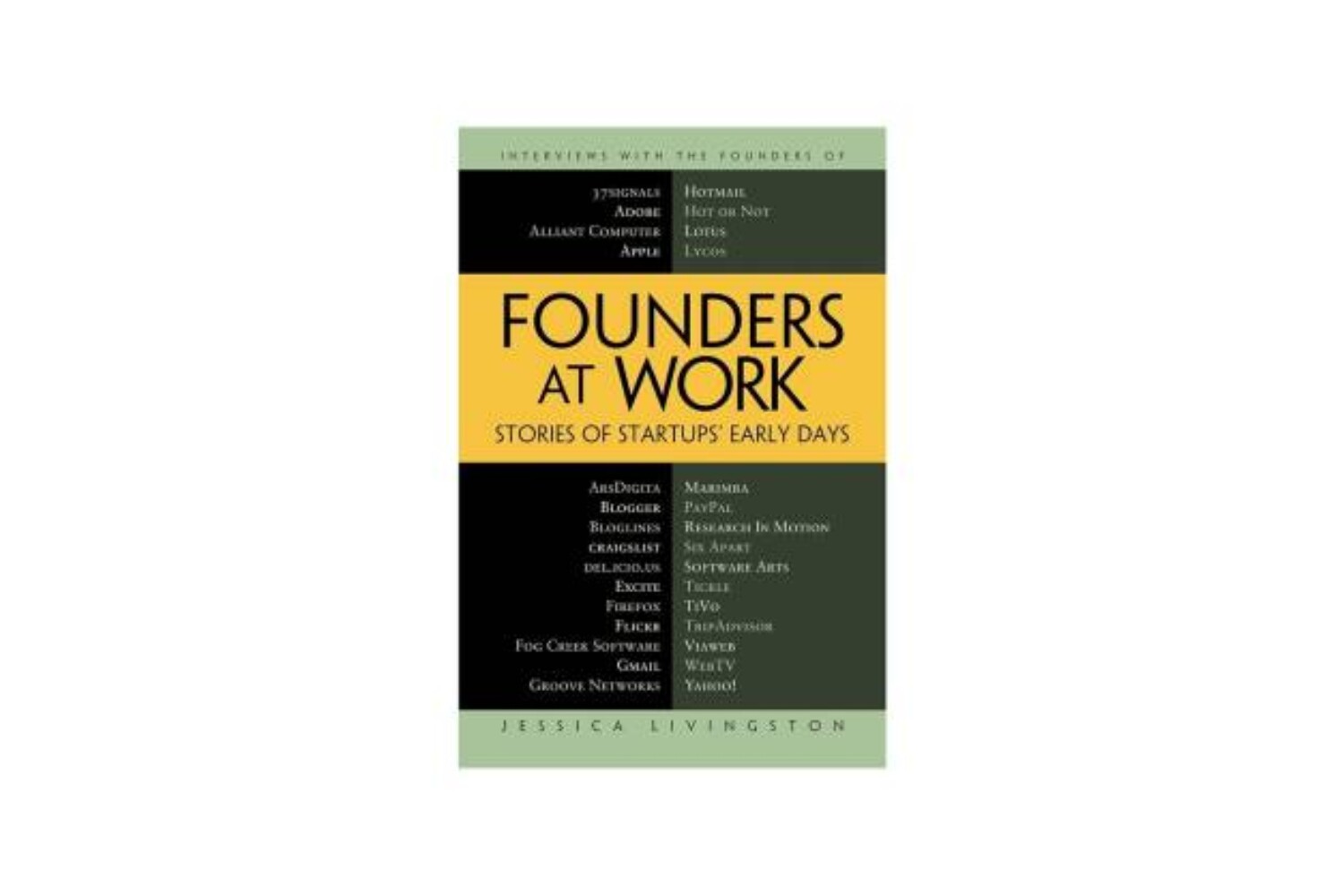
Founders at Work: Stories of Startups’ Early Days by Jessica Livingston offers a refreshing alternative to the polished startup success story. Through candid interviews with entrepreneurs behind companies such as PayPal, Apple, Hotmail, Blogger, Yahoo, and Flickr, Livingston takes readers back to the years when these businesses were little more than ideas, experiments, and small groups of people trying to solve problems.
What makes the book especially interesting is how ordinary and uncertain these beginnings often were. Many founders didn’t have perfect business plans. Some struggled to explain their ideas. Others discovered that their original products weren’t what customers actually wanted.
For anyone building a business, this is a reassuring but important reminder: successful entrepreneurship is rarely a straight line from a brilliant idea to an extraordinary outcome.
PayPal and Blogger: The Business You Start May Not Be the Business You Build
One of the strongest themes in the book is that many successful startups became something very different from what their founders originally intended.
Take PayPal.
Max Levchin initially worked on security software for handheld devices such as the PalmPilot. The technology eventually evolved into a way of transferring money between these devices, but customer behavior revealed something unexpected.
The web-based money-transfer feature attracted far more interest than the original handheld application. What began as a supporting feature was becoming the actual business opportunity.
Instead of insisting that customers adopt the original vision, the founders followed the evidence. PayPal eventually became a major online payments company and was acquired by eBay in 2002.
Blogger followed a similarly unpredictable path.
Evan Williams and his colleagues at Pyra Labs originally set out to develop project management software. A simple blogging tool emerged during that process, allowing people to publish content online without requiring sophisticated technical knowledge.
That seemingly secondary feature turned out to be far more compelling than the initial product.
The company faced serious financial difficulties, but Blogger survived and was eventually acquired by Google.
These stories challenge one of the most common assumptions about startups: that a founder’s primary responsibility is to remain loyal to the original idea.
I see it differently after reading these examples.
A founder should remain committed to solving a meaningful problem, but not necessarily to the first solution imagined.
The ability to recognize when customers are pulling a product in an unexpected direction may be more valuable than the ability to defend the original business plan.
 Great Ideas Are Not Always Recognized Immediately
 Great Ideas Are Not Always Recognized Immediately
We often assume that a truly innovative product will attract immediate excitement. If the idea is sufficiently powerful, surely customers and investors will understand its potential.
The founders interviewed by Livingston repeatedly demonstrate why this assumption is unreliable.
Steve Perlman faced considerable difficulty explaining the possibilities of WebTV, which sought to bring internet capabilities to ordinary television sets during the 1990s.
The challenge wasn’t simply building the technology. It was helping people imagine a different way of using a familiar device.
This is a recurring difficulty with innovation. People evaluate new ideas using the assumptions and experiences they already have. When a product introduces a new category or behavior, potential customers may struggle to understand why they need it.
That creates a difficult situation for founders.
If the market doesn’t immediately respond, is the idea wrong? Is the explanation weak? Is the product incomplete? Or is the market simply not ready?
There is no universal answer.
Some products fail because they don’t solve an important problem. Others struggle because their value is difficult to communicate or the supporting technology has not matured.
The lesson is not to ignore criticism or blindly trust every unconventional idea. It is to distinguish between a genuinely weak proposition and one that requires better explanation, experimentation, or timing.
For founders building technology in specialized industries, that distinction can be crucial.
Sometimes the Team Matters More Than the Original Idea
One of the more surprising stories concerns Joe Kraus and the early days of Excite, the internet search company.
Kraus and several friends from Stanford began working together before they had a fully developed business concept. Their shared technical capabilities, working relationship, and willingness to experiment gave them the foundation from which a promising product could emerge.
This reverses the way we usually think about building a startup.
We are often taught that everything begins with the idea. First identify the opportunity, then assemble the team required to pursue it.
But an excellent team can sometimes discover and refine a worthwhile opportunity through working together.
That doesn’t mean ideas are unimportant. It means that the quality of people, their ability to learn, and the trust between them can influence whether an initial idea survives contact with reality.
In technology businesses, this is especially relevant because products rarely remain unchanged.
Customer requirements evolve. Software architectures need revision. Market assumptions prove incomplete. New technologies create unexpected possibilities.
When these changes occur, a team that communicates openly and adapts quickly becomes a major competitive advantage.
 A brilliant idea in the hands of an inflexible team may struggle. A reasonably good idea in the hands of capable, curious people may develop into something far more valuable than anyone originally imagined.
The Best Startup Ideas Often Begin With Personal Frustration
Not every successful startup begins with sophisticated market research or an elaborate strategic plan.
Sometimes it begins with an irritation.
The founders of Hotmail experienced the inconvenience of being unable to access their email freely outside the office environment. That problem contributed to the development of web-based email, allowing people to access messages through a browser.
Yahoo began as Jerry Yang and David Filo’s effort to organize useful links and information on the rapidly expanding internet.
Joshua Schachter’s del.icio.us developed from a practical need to organize and retrieve web bookmarks using tags.
These examples share something important.
The founders were close enough to a problem to understand why existing solutions were inconvenient. They began by improving an experience they understood personally.
What makes this especially useful for entrepreneurs is that it shifts our attention away from trying to invent something spectacular.
A worthwhile startup opportunity may be hiding inside a frustrating workflow, an unnecessarily complicated process, or a problem that people have simply become accustomed to tolerating.
Of course, personal frustration alone doesn’t guarantee a viable business. The founder still needs to determine whether enough other people experience the problem and whether they are willing to adopt or pay for a solution.
But personal experience can provide a valuable starting point.
Sometimes the best way to discover an opportunity is to notice what repeatedly makes ordinary work harder than it should be.
Simplicity Can Be More Valuable Than Sophistication
Steve Wozniak’s account of Apple’s early days offers another powerful lesson: building something useful doesn’t always require adding more features.
Wozniak was deeply interested in elegant engineering. His approach involved designing computer hardware that achieved impressive functionality with efficient use of components.
That focus on simplicity helped shape the early Apple computers.
The lesson applies beyond electronics.
Technical teams often take pride in what their products can do. More features, more configurations, greater complexity, and additional functionality can all appear to make a product more advanced.
But customers don’t necessarily want the most complicated solution.
They want something that works, solves their problem, and doesn’t create unnecessary effort.
A product that requires extensive explanation may be technically impressive while remaining commercially difficult to adopt.
This is particularly relevant in enterprise technology. We can build sophisticated systems with enormous capabilities, but if operators, technicians, or customers struggle to use them, the product’s practical value is reduced.
Good engineering involves knowing what to include.
Great product thinking also involves knowing what to leave out.
More Investment Doesn’t Always Mean a Stronger Company
Because this blog follows my earlier reflection on Venture Deals, I found the book’s discussion of financing especially interesting.
Livingston’s interviews reveal that external investment can be both helpful and complicated.
Philip Greenspun’s experience with ArsDigita illustrates how bringing in investors can introduce management and governance conflicts that affect the direction of a company.
Joel Spolsky approached Fog Creek Software with a determination to build a financially sustainable business while avoiding some of the difficulties he had seen in venture-backed companies.
The broader lesson is not that venture capital should be avoided.
Many successful businesses need external investment to finance research, product development, infrastructure, and growth.
But capital changes the relationship between the founder and the company.
It can create new expectations, ownership arrangements, reporting requirements, and pressure to pursue particular financial outcomes.
Founders should therefore be careful not to confuse fundraising success with business success.
A startup that earns revenue from satisfied customers may be developing a stronger foundation than one that repeatedly attracts funding without demonstrating meaningful demand.
The right financing approach depends on the business model, market opportunity, capital requirements, and the founder’s objectives.
Sometimes growth requires substantial investment. At other times, remaining lean provides the freedom to experiment without unnecessary pressure.
The important thing is to make the choice deliberately.
Flickr: Why Timing Matters as Much as the Idea
 Flickr: Why Timing Matters as Much as the Idea
Caterina Fake and Stewart Butterfield’s story is another fascinating example of unexpected product development.
Their original venture, Game Neverending, was an online game built around social interaction and virtual experiences.
During development, the team began exploring photo-sharing functionality. That idea eventually became Flickr.
The timing was particularly favorable. Digital cameras were becoming more common, internet access was improving, and people were increasingly comfortable sharing personal content online.
Flickr emerged when several technological and social developments were coming together.
This is a useful reminder that even a strong idea needs the right environment.
A product can be too early if customers lack the technology, infrastructure, or habits required to use it. The same product may become highly successful when those surrounding conditions change.
But timing isn’t entirely outside a founder’s influence.
Founders can watch emerging technologies, study changing customer behavior, experiment with smaller versions of a product, and remain ready to respond when demand begins to accelerate.
The challenge is to recognize when an opportunity is becoming real without assuming that every interesting trend represents a viable business.
Flickr’s story combines adaptation, customer behavior, and timing. The founders didn’t simply predict the future perfectly. They noticed a promising direction and pursued it.
The Most Important Lesson: Build Something People Actually Want
Among the many experiences shared in Founders at Work, Paul Graham’s perspective provides a useful foundation.
Graham, who co-founded Viaweb and later Y Combinator, emphasized the importance of creating products that people genuinely want.
It sounds almost too obvious to qualify as startup advice.
Yet founders regularly become absorbed in technology, features, plans, and ambitious visions without sufficiently testing whether customers value the proposed solution.
We can spend months improving a product while avoiding difficult conversations with potential users. We may assume that technical superiority will automatically lead to adoption. We may interpret interest and compliments as evidence of real demand.
But customers ultimately judge a product through the problems it solves.
This is why the history of these startups is so valuable.
PayPal changed direction when user behavior revealed stronger demand elsewhere. Blogger found that a relatively simple publishing tool was more valuable than its original project. Flickr emerged from a different product and succeeded when customers embraced photo sharing.
Across these stories, the common lesson isn’t that every startup must pivot.
It is that founders must pay attention to evidence.
The product we’re proudest of building may not be the one customers find most valuable.
And sometimes the feature we initially consider secondary is the opportunity worth pursuing.
Founder Field Note: The Gap Between Ideas and Execution
What I find most relatable about Founders at Work is how closely these early startup experiences resemble the everyday realities of building technology businesses.
Through ZAUQ Group, PHARMA TRAX, FOOD TRAX, TEHQEEQ, and our wider innovation initiatives, there are always more ideas than available time and resources.
We encounter customer problems that suggest new products, operational challenges that could be solved through software, and emerging technologies that create opportunities worth exploring.
But recognizing an opportunity and successfully developing it are two very different things.
Some ideas require more research. Some need a small prototype before they deserve significant investment. Others depend on market readiness, customer education, or capabilities we still need to develop.
The stories in Livingston’s book remind me that we shouldn’t expect every promising idea to arrive with a perfect roadmap.
What matters is creating a disciplined way to test ideas, learn from customers, and decide which opportunities deserve continued effort.
I also find the discussion about teams particularly relevant.
A founder can identify opportunities, provide direction, and bring experience, but the capacity to pursue those opportunities depends on people who can investigate problems, develop solutions, and adapt when assumptions change.
If every idea requires the founder’s constant involvement, the organization will eventually become limited by the founder’s available attention.
Building capable teams is therefore not only an operational priority. It is an innovation priority.
The book also reinforces the value of listening carefully to what customers actually use and appreciate, rather than assuming that our original concept must be the final answer.
For me, that is one of entrepreneurship’s most important disciplines: remaining committed to the problem while being flexible about the solution.
Practical Founder Insight: What I Would Apply
After reading these startup stories, I would focus on five practical habits:
- Test before committing heavily. Start with the smallest credible experiment that can reveal whether customers genuinely need the solution.
- Listen to behavior, not only feedback. Interest and compliments are encouraging, but actual adoption, repeated use, and willingness to pay provide stronger evidence.
- Protect the team’s ability to learn. Encourage people to challenge assumptions and recommend changes when new information emerges.
- Keep the product simpler than your technical ambitions. Build around the customer’s actual workflow rather than every feature that is technically possible.
- Match financing to the business. Raise capital when it strengthens the company’s opportunity, not merely because fundraising appears to validate success.
There is also an important limitation to remember when studying famous startups: these are largely stories of companies that survived and became influential. Countless other entrepreneurs worked just as hard, changed direction, listened to customers, and still failed.
Their experience reminds us that good practices improve decisions, but cannot eliminate market uncertainty or guarantee success.
 That doesn’t make the lessons less valuable. It makes them more realistic.
Conclusion
Founders at Work by Jessica Livingston is a reminder that extraordinary companies often begin in surprisingly ordinary circumstances.
PayPal didn’t start as the online payments platform it became. Blogger emerged from a different product idea. Flickr developed from an online game. Other successful businesses began with simple frustrations, personal projects, or small groups of people experimenting without knowing exactly where the journey would lead.
These stories challenge the polished version of entrepreneurship in which successful founders appear to know everything from the beginning.
Real startup building is usually messier.
It requires experimentation, patience, customer understanding, capable teams, financial judgment, and the willingness to change direction when evidence demands it.
Perhaps the most encouraging lesson is that founders don’t need perfect certainty before they begin. They need enough clarity to take the next responsible step and enough humility to learn from what happens afterward.
The founders featured in this book weren’t successful because every decision was correct. Their stories show how the ability to learn, adapt, and keep building mattered during uncertain beginnings.
The question I’m taking from this book is simple: Am I so focused on executing my original idea that I might be overlooking the better opportunity my customers are already showing me?