
Introduction
One of the biggest challenges in entrepreneurship isn’t starting a company. It’s keeping that company entrepreneurial once it begins to succeed.
In the early days, founders are naturally curious. We question everything, experiment with limited resources, challenge established practices, and constantly search for better ways of doing things. There are fewer processes to follow, fewer layers of approval, and less to lose when an experiment doesn’t work.
But as the business grows, something changes. Meetings replace experimentation. Processes become more important than outcomes. People become cautious about making mistakes, and yesterday’s successful decisions gradually turn into rules that nobody wants to question.
A company can become financially stronger while slowly losing the curiosity that helped create it.
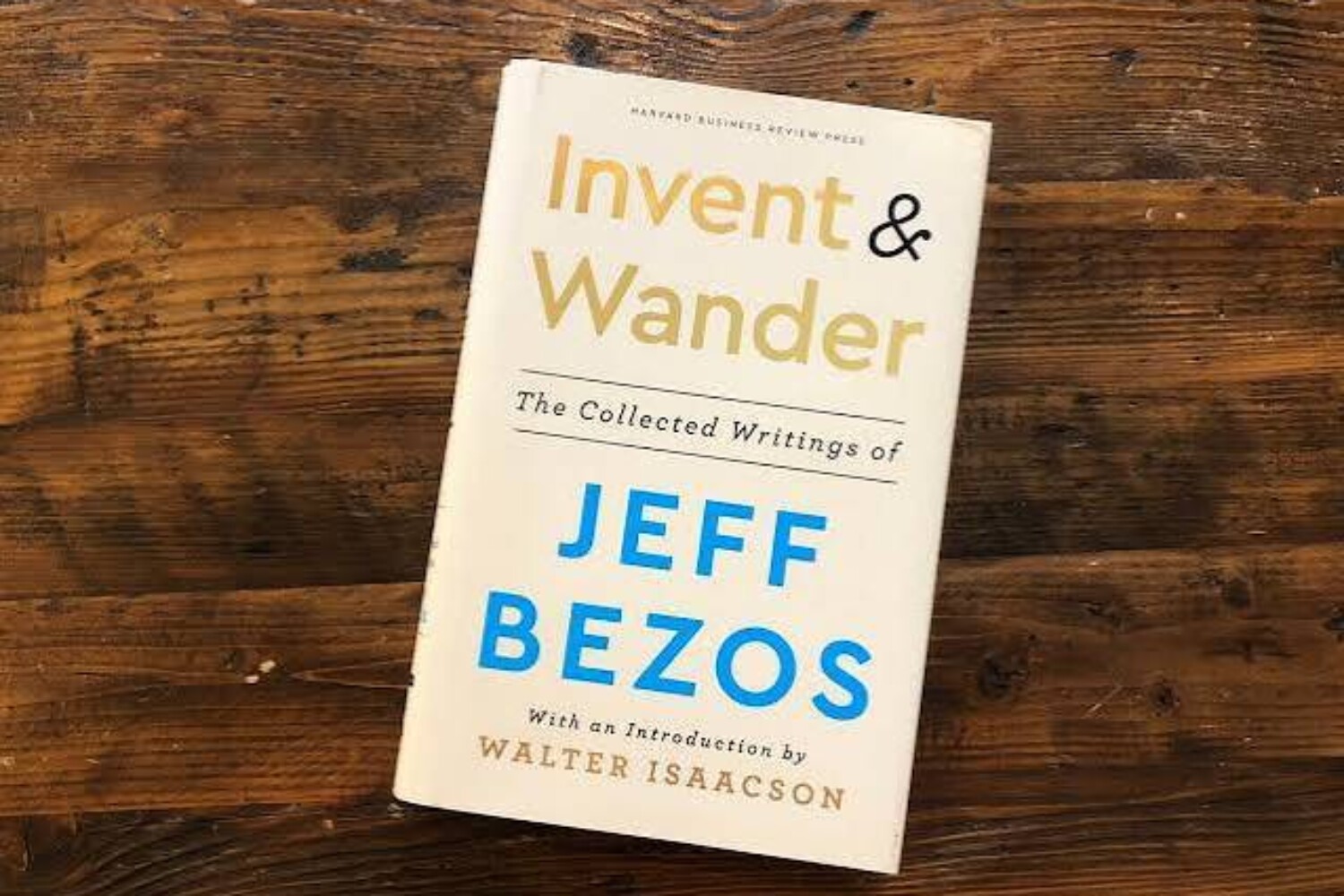
Invent and Wander: The Collected Writings of Jeff Bezos, with an introduction by Walter Isaacson, offers an interesting perspective on this challenge. Rather than presenting a conventional business biography, the book brings together Bezos’s annual shareholder letters, speeches, and interviews, revealing how he thought about customers, innovation, long-term decisions, organizational culture, and the future of technology.
What interested me most wasn’t the scale of Amazon or the extraordinary wealth associated with its founder. It was a more practical question: How do you create an organization that continues inventing even after it has established a successful business?
For founders building technology companies, this question is particularly relevant. Technology changes, customer expectations evolve, and opportunities emerge in unexpected places. The processes that made a company successful yesterday may not be sufficient for what customers need tomorrow.
The book’s central lesson, for me, is that invention requires two abilities that can seem contradictory: the discipline to execute and the freedom to explore.
 The Day 1 Mindset: Success Can Become the Enemy of Curiosity
 The Day 1 Mindset: Success Can Become the Enemy of Curiosity
One of Bezos’s most recognizable ideas is the Day 1 mindset.
For Amazon, Day 1 represents the energy, urgency, customer focus, and willingness to experiment normally associated with an early-stage startup. Day 2 represents the opposite: an organization becoming increasingly comfortable, bureaucratic, and resistant to change.
The distinction isn’t about the age or size of a business. It’s about how people think.
A young company can already behave like a stagnant organization if its team avoids difficult decisions, ignores customers, or refuses to challenge established assumptions. Likewise, a mature business can remain innovative when its people continue questioning how work could be improved.
This is a useful way to examine founder-led companies.
We often introduce processes to improve consistency, and rightly so. Customers need reliable delivery, teams need clear responsibilities, and businesses require financial discipline. But eventually, people can become more concerned with following the process than achieving the outcome it was created to support.
A customer problem remains unresolved because everyone completed their assigned task. A product feature takes months to approve because the decision must pass through several people. A useful idea disappears because it doesn’t fit the existing plan.
Bezos’s Day 1 philosophy challenges this tendency. It encourages leaders to remain focused on customers, recognize important external changes, and maintain the ability to make decisions without unnecessary delay.
The lesson is not to remove processes. It’s to remember that processes should serve customers and outcomes, not become the purpose of the organization.
Customer Obsession: Start With the Problem, Not the Technology
Amazon’s customer-centered philosophy is another recurring theme throughout the book.
Bezos argues that businesses should focus intensely on what customers value, even when customers themselves cannot describe the exact product or solution they want.
This is an important distinction.
Customers can usually explain what frustrates them. They understand when a service is expensive, inconvenient, unreliable, slow, or difficult to use. But they may not know which technology could solve that problem or what a better experience might look like.
Amazon Prime illustrates this approach. Customers wanted convenience, predictable delivery, and fewer reasons to hesitate before making a purchase. A membership program offering faster shipping was not necessarily a product customers would have designed themselves, but it addressed frustrations that were already present.
The same thinking influenced Amazon Web Services, where capabilities developed around Amazon’s own technical infrastructure helped create a new business serving other organizations.
For founders, the implication is clear: innovation should begin with an understanding of the problem rather than an attachment to a particular solution.
This becomes especially important in technology businesses. Engineers may become excited about a new camera, AI model, software framework, automation capability, or data platform. But customers rarely purchase technology simply because it is technically advanced.
They care about the outcome.
Will it reduce errors? Improve reliability? Simplify compliance? Save time? Reduce operational risk? Make an employee’s work easier?
A founder must connect technical possibilities with practical customer value. Otherwise, innovation can become an expensive exercise in building things that look impressive but solve very little.
Invent and Wander: Why Not Every Innovation Begins With a Plan
 Invent and Wander: Why Not Every Innovation Begins With a Plan
The most distinctive idea in the book is contained in its title.
Bezos describes two different approaches to creating something new.
Sometimes the objective is clear. The company understands the customer problem, knows what needs to be built, and can follow an organized plan to deliver it efficiently.
At other times, the opportunity is less obvious. There is an intuition that something valuable might be possible, but the route is unclear. People experiment, follow interesting questions, encounter unexpected results, and gradually discover what the opportunity could become.
This second approach is what Bezos calls wandering.
Wandering is not the same as working without direction. It means allowing curiosity and informed exploration to play a role when the answer cannot be determined in advance.
The development of Amazon Echo and Alexa provides a compelling example.
Customers weren’t approaching Amazon asking for a voice-controlled speaker that could answer questions, play music, and interact with connected devices. The product emerged through experimentation involving machine learning, cloud computing, and ideas about how people might interact with technology.
The journey included unsuccessful work.
Amazon’s Fire Phone failed commercially, but Bezos later explained that some of the learning and people involved helped accelerate the development of Echo and Alexa.
This is a fascinating lesson about innovation.
Not every experiment needs to become a successful product to create value. Sometimes the knowledge, technical capability, or unexpected discovery becomes useful somewhere else.
For founders, however, wandering must have boundaries. An established business cannot pursue every interesting idea indefinitely. Customer obligations, finances, and operational priorities still need attention.
The challenge is to create enough room for exploration without allowing experimentation to become an excuse for poor execution.
Efficiency helps us improve what already exists. Curiosity helps us discover what might exist next.
We need both.
Long-Term Thinking: Some Opportunities Need Time to Become Obvious
 Long-Term Thinking: Some Opportunities Need Time to Become Obvious
Another recurring idea in Bezos’s shareholder letters is the importance of long-term thinking.
Building important capabilities often requires investment well before the financial returns become visible. New businesses may take years to develop, and some experiments will fail despite careful preparation.
This creates tension between short-term performance and long-term opportunity.
A founder may see an attractive technology opportunity but hesitate because it won’t generate revenue immediately. A company may delay developing internal capabilities because existing projects are already profitable. Teams may focus so intensely on quarterly targets that they neglect the skills and infrastructure needed for future growth.
Bezos’s philosophy encourages founders to consider whether a decision will create substantial customer value over time, even if its immediate financial impact is unattractive.
But long-term thinking should not be confused with unlimited patience or unquestioning belief.
Founders still need evidence, financial discipline, and clear milestones. An idea shouldn’t continue receiving resources simply because someone describes it as strategic.
The practical question is whether the company is learning something valuable and whether the long-term opportunity remains credible.
This is particularly relevant for businesses developing enterprise software, industrial technology, and solutions connected with regulatory requirements.
Some markets need education before they adopt new systems. Some products require considerable research and testing. Others depend on infrastructure or customer behavior that takes time to develop.
A strong founder needs enough conviction to continue through temporary uncertainty and enough humility to change direction when the evidence no longer supports the plan.
Decision-Making: Not Every Choice Deserves a Committee
One of the most useful management concepts in the book is the distinction between one-way and two-way door decisions.
A one-way door decision is difficult or costly to reverse. Such choices deserve greater care, consultation, and analysis.
A two-way door decision can be reversed or adjusted without unacceptable consequences. These decisions should generally move faster because the organization can learn from the result.
This is particularly valuable for founders who become involved in too many operational decisions.
A company might spend weeks debating an internal dashboard, marketing experiment, or minor workflow improvement, even though trying a limited version would involve relatively little risk.
Meanwhile, genuinely consequential choices—such as long-term financial commitments, major contractual obligations, or architecture decisions affecting regulated systems—may not receive enough structured scrutiny.
The decision-making process should reflect the importance and reversibility of the decision.
Bezos also discusses the value of making decisions with incomplete information and correcting course quickly. His broader point is that waiting for perfect certainty can sometimes be more expensive than making a reasonable, reversible decision and learning from it.
For founders, this requires judgment.
A small internal experiment can be launched quickly. A change affecting medicine serialization, customer data, financial controls, or production safety may require formal testing and approval.
Speed is valuable only when combined with an understanding of consequences.
The objective is not to make every decision faster. It is to stop treating every decision as though it carries the same level of risk.
Culture: Hire People Who Want to Build
Amazon’s growth also led Bezos to think deeply about organizational culture.
He distinguishes between people who are primarily motivated by the immediate rewards of a role and those who feel connected to the organization’s mission.
This distinction is not an argument that employees shouldn’t care about compensation. Fair rewards matter, and talented people deserve to be valued.
The more interesting question is whether employees also find meaning in the work and feel motivated to improve it.
A person who sees work only as a list of assigned tasks may complete those tasks competently. Someone who understands the purpose behind the work may also notice problems, question assumptions, and identify opportunities that others overlook.
This connects directly with the idea of wandering.
Innovation cannot remain entirely dependent on the founder.
As a company grows, curiosity needs to exist throughout the organization. Developers should question unnecessary complexity. Support teams should identify recurring customer frustrations. Salespeople should bring market observations into product discussions. Operations teams should suggest improvements based on practical experience.
But this requires a culture in which thoughtful disagreement is welcome.
If employees believe that questioning an existing process will be interpreted as criticism, they will eventually stop asking questions.
Similarly, a founder who insists on providing every answer limits the organization’s ability to develop new ideas.
The responsibility of leadership is to establish clear standards while creating enough trust for people to think independently.
A company becomes more innovative when curiosity is distributed rather than concentrated in one person.
The Limits of the Bezos Playbook
 The Limits of the Bezos Playbook
There is an important distinction worth making when reading Invent and Wander.
The book consists primarily of Bezos’s own public writings and statements. It explains how he describes his principles and decisions, but it is not an independent examination of Amazon’s history.
That matters because successful founders naturally interpret their journeys through lessons they consider important. Their explanations can be highly useful without representing the complete story.
Amazon’s growth has also raised debates about competition, labor practices, market power, and the responsibilities of large technology companies.
A serious reader should be able to appreciate its achievements while still examining those questions critically.
The same applies to the management ideas in the book.
Customer obsession is valuable, but it should not justify unrealistic promises or neglect of employees. High standards are important, but they should not become an excuse for unsustainable pressure. Experimentation can create breakthroughs, but failures have real financial and human costs.
Not every founder operates with the resources or risk tolerance of a company like Amazon.
The goal isn’t to copy every Bezos practice.
It’s to understand the thinking behind the practices, consider where they are useful, and adapt them responsibly to our own organizations.
Founder Field Note: Protecting Curiosity While Building for Scale
As I reflect on Invent and Wander, I find its central tension especially relevant to my own entrepreneurial journey.
Across ZAUQ Group, PHARMA TRAX, FOOD TRAX, TEHQEEQ, and our wider technology initiatives, we operate in fields where customer needs and technical possibilities continue to evolve.
Industrial automation, machine vision, pharmaceutical serialization, traceability, software development, and AI all present opportunities to improve existing systems or develop entirely new approaches.
But there is a practical challenge.
As businesses become more established, daily operational responsibilities naturally consume attention. Customers need support, projects require delivery, teams need decisions, and financial commitments must be managed.
These responsibilities are essential. Yet they can also leave limited space for exploring what might come next.
The book reminds me that innovation requires deliberate attention. It doesn’t happen simply because a company works in technology.
We need time to understand emerging customer problems, test unfamiliar ideas, explore developments outside our industry, and occasionally question solutions that have worked well for years.
At the same time, experimentation must remain connected to operational reality.
In businesses involving pharmaceutical traceability and regulated production environments, a creative idea isn’t ready for deployment merely because a prototype works. Reliability, validation, customer requirements, and responsible engineering remain essential.
For me, the opportunity is to strengthen both sides of the organization: the discipline to deliver dependable solutions today and the curiosity to discover better solutions for tomorrow.
That balance may be one of the most important responsibilities of a founder as the company grows.
Five Practical Lessons I Would Apply
1. Keep asking what frustrates customers. Regularly examine recurring support issues, operational delays, and complaints. Some of the most promising innovations may be hiding inside problems customers have learned to tolerate.
2. Reserve space for exploration. Give technical and product teams opportunities to investigate ideas that do not yet have a complete business case. Keep experiments small enough that learning remains affordable.
3. Distinguish reversible from irreversible decisions. Move quickly on low-risk experiments, but apply appropriate scrutiny to commitments involving significant capital, customer data, safety, or long-term architecture.
4. Recognize learning from unsuccessful experiments. When a prototype fails, document what was discovered. The technical capability or customer insight may become valuable in a different project.
5. Prevent the founder from becoming the innovation bottleneck. Encourage teams to bring ideas, challenge assumptions, and take ownership. An organization becomes stronger when invention no longer depends entirely on one person’s curiosity.
Conclusion
 Conclusion
Invent and Wander offers a useful perspective on what it takes to keep building after the excitement of starting a company has passed.
Jeff Bezos’s writings repeatedly return to a few principles: remain focused on customers, think beyond immediate financial results, make decisions with appropriate speed, maintain high standards, and remain willing to experiment.
But the book’s most interesting idea, for me, is the relationship between disciplined execution and curiosity.
Founders naturally become better at organizing, planning, delegating, and controlling as their businesses grow. These capabilities help create reliable organizations.
Yet the future rarely arrives through efficiency alone.
New opportunities often emerge from unfamiliar questions, incomplete ideas, unexpected customer behavior, and experiments whose value wasn’t obvious at the beginning.
A successful company needs the discipline to deliver what it has promised.
An innovative company also needs the freedom to discover what nobody has asked for yet.
The question I’m taking from this book is simple: As my company becomes better at executing today’s business, am I still protecting enough curiosity to discover tomorrow’s opportunities?