
Introduction
Modern founders live inside a constant stream of advice. There are books on productivity, habits, leadership, emotional intelligence, AI, decision-making, sales, negotiation, health, focus, and resilience. Much of this advice is useful. But sometimes modern self-help becomes too shallow because it treats every problem as a technique problem.
If we are distracted, we need a better app. If we are tired, we need a better routine. If we are anxious, we need a better system. If we are underperforming, we need better goals. If we are jealous, restless, angry, impatient, greedy, or proud, we often try to rename these states in softer language so we do not have to face them directly.
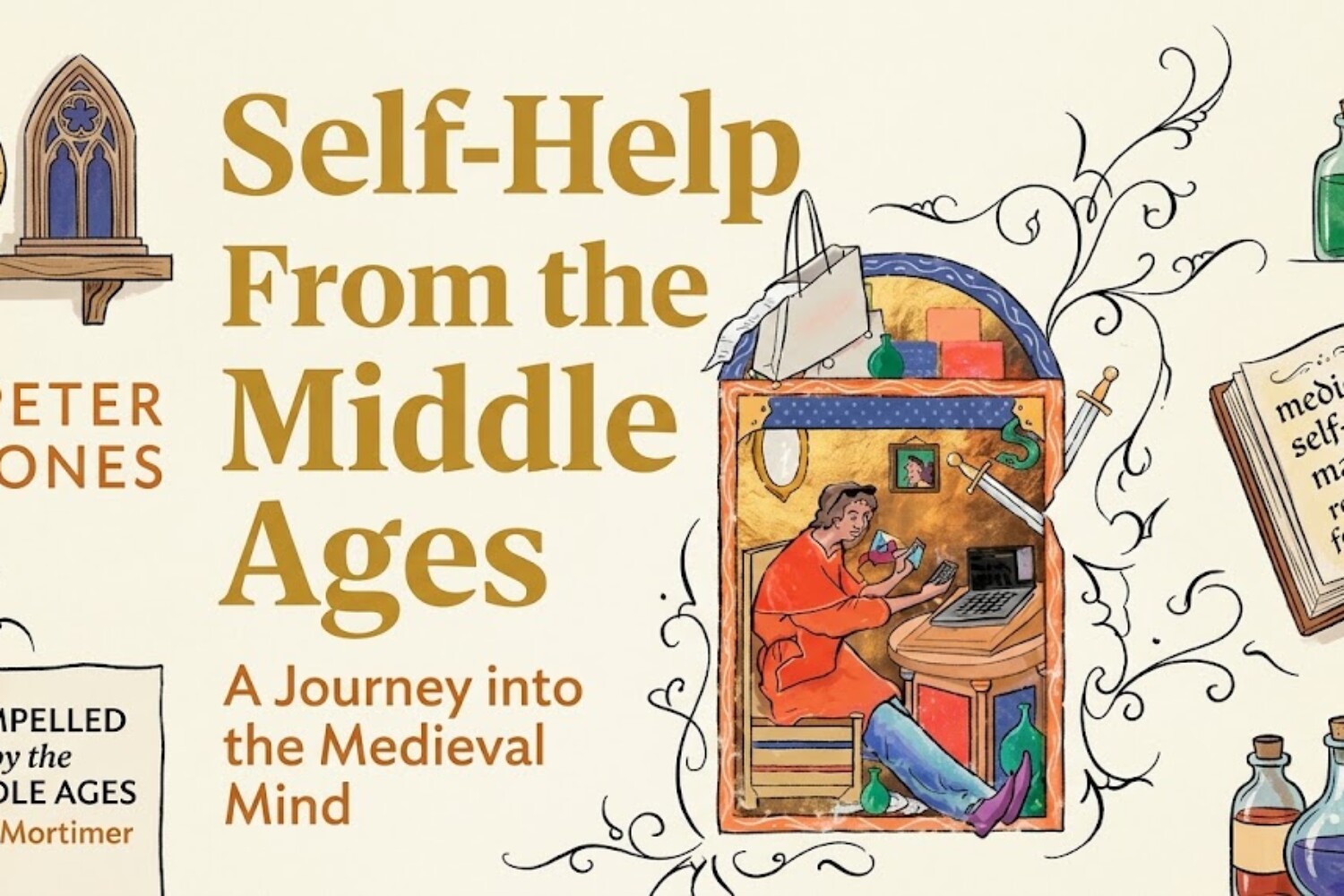
Self-Help from the Middle Ages by Peter Jones offers a very different kind of mirror. It takes us into a world where human struggle was not only understood through efficiency, mood, or performance, but through moral language. Medieval thinkers studied pride, envy, anger, greed, gluttony, lust, and sloth not simply as religious labels, but as ways of understanding the human mind, desire, weakness, attention, community, and self-control.
For founders, this is surprisingly relevant. The problems of modern leadership may look different on the surface, but many inner patterns are ancient. Pride still damages judgment. Envy still distorts ambition. Greed still makes enough feel impossible. Anger still harms trust. Restlessness still prevents deep work. Excess still weakens discipline. Avoidance still hides behind busyness.
This does not mean we need to romanticize the Middle Ages or copy medieval life. It means that older moral frameworks can sometimes name what modern language avoids. They can help us ask better questions about the quality of our inner life, not only the efficiency of our calendar.
In founder-led companies like ZAUQ Group, PHARMA TRAX, FOOD TRAX, and related ventures, this matters because leadership is not only a technical function. It is a moral responsibility. We handle customers, teams, money, trust, technology, compliance, promises, pressure, and influence. The founder’s inner condition eventually becomes visible in the company’s culture.
The central lesson from Self-Help from the Middle Ages is simple: before we fix our productivity, we may need to examine our desires, habits, fears, and moral patterns more honestly.
Summary and Detailed Insights
Self-Help from the Middle Ages explores how medieval writers developed a serious and detailed understanding of the human mind. Their language was different from modern psychology, but their concerns were deeply familiar. They studied why people lose control, why desire becomes disorderly, why envy corrodes peace, why pride blinds judgment, why anger damages relationships, why comfort can become excess, and why spiritual or emotional tiredness can make life feel empty.
The book’s value is not that medieval people had perfect answers. They did not. Every age has its own limitations. The value is that they were willing to treat inner life seriously. They believed that human beings needed examination, confession, discipline, community, humility, and repeated correction. They understood that people are not machines to be optimized, but souls and bodies struggling with desire, fear, weakness, and hope.
For founders, this creates a useful contrast with modern business culture. Today, we are often rewarded for speed, confidence, visibility, growth, and ambition. These qualities are not wrong. But without self-awareness, they can easily become pride, restlessness, vanity, greed, or impatience. A founder may call it ambition, but underneath it may be insecurity. He may call it high standards, but underneath it may be anger. He may call it growth, but underneath it may be greed. He may call it strategy, but underneath it may be fear of being left behind.
The medieval framework invites the founder to look beneath behavior and examine the inner driver. That is where real leadership maturity begins.
 Why Old Wisdom Can Still Help Modern Founders
 Why Old Wisdom Can Still Help Modern Founders
Every age believes its own problems are new. In some ways, they are. We live with AI, smartphones, global markets, regulatory complexity, digital platforms, modern medicine, and constant information flow. Medieval people did not live inside this environment.
But human nature has not changed as much as our tools have changed. We still compare ourselves with others. We still want recognition. We still fear failure. We still overconsume when stressed. We still delay hard conversations. We still become angry when control slips. We still want more even after receiving much. We still struggle to sit quietly with ourselves.
This is why older wisdom matters. It reminds us that not every struggle is caused by modern technology. Some struggles are built into human nature. Technology may amplify them, but it did not create them.
A founder looking at medieval self-help can ask: what part of my struggle is truly about workload, and what part is about desire? What part is about strategy, and what part is about pride? What part is about market pressure, and what part is about comparison? What part is about opportunity, and what part is about greed? What part is about fatigue, and what part is about losing meaning?
These are uncomfortable questions, but they are useful. Modern leadership improves when it becomes honest about ancient weaknesses.
Pride: The Founder’s Most Dangerous Blind Spot
Pride is especially dangerous for founders because the founder role naturally rewards confidence. A founder must believe before others believe. He must sell the future before it is fully visible. He must take decisions when certainty is incomplete. He must carry conviction when the market doubts him.
But conviction can slowly become pride if the founder stops listening.
Pride appears when the founder begins to believe that his intelligence is enough, that disagreement is disrespect, that feedback is weakness, or that success proves superiority. It appears when he stops asking what he can learn. It appears when he prefers being right over finding truth. It appears when he surrounds himself with agreement instead of honest counsel.
In business, pride is expensive. It delays correction. It hides weak signals. It makes teams afraid to speak. It turns customer feedback into insult. It turns a founder’s past success into a barrier against future adaptation.
The medieval concern with pride is therefore highly practical. It tells the founder that the first leadership discipline is humility. Not weakness. Not lack of confidence. Humility means staying close to reality. It means allowing truth to correct ego before reality corrects it more painfully.
A founder who can say, “I may be wrong,” is not weaker. He is safer to follow.
Envy: When Comparison Corrupts Ambition
Envy is one of the most modern-looking ancient problems. Today, we experience it through LinkedIn updates, competitor announcements, awards, revenue claims, office photos, event stages, funding news, and public success stories. Everyone appears to be growing, winning, speaking, scaling, and being recognized.
For founders, envy can quietly poison ambition. Instead of asking what is right for the company, the founder starts asking why someone else is ahead. Instead of focusing on the customer, he focuses on the competitor’s visibility. Instead of building patiently, he becomes restless because another founder looks more successful.
Envy is dangerous because it does not only want improvement. It wants relief from comparison. That relief can push the founder toward scattered decisions, unnecessary expansion, copycat strategy, public performance, or bitterness.
A healthier ambition asks a different question: what is my work, my responsibility, my timing, and my path?
This does not mean ignoring competitors. Markets must be studied. But studying competitors is different from being emotionally captured by them. One creates intelligence. The other creates resentment.
Medieval moral language helps because it names envy directly. It does not dress it up as market awareness. It asks whether another person’s success is becoming a source of learning or a source of inner corrosion.
A founder should let others’ success expand imagination, not poison peace.
Avarice: When Growth Becomes Never Enough
Business requires financial discipline. Revenue matters. Profit matters. Cash flow matters. Pricing matters. Growth matters. A founder who ignores money cannot build responsibly.
But avarice is different from financial responsibility. Avarice is the inner condition where more never becomes enough. It is not only about money. It can be about customers, attention, recognition, control, market share, influence, or status.
A founder can become trapped in this pattern. One customer win is not enough. One milestone is not enough. One venture is not enough. One recognition is not enough. One successful year is not enough. The company keeps moving, but peace never catches up.
The problem is not ambition itself. The problem is ambition without inner measure. When there is no internal definition of enough, the founder becomes endlessly available to pressure. He may overcommit, overexpand, under-rest, neglect family, ignore health, or take low-quality opportunities simply because they promise more.
Medieval wisdom would ask the founder to examine desire. What am I chasing? What will this give me? What will it cost? Is this opportunity aligned with purpose, or is it feeding restlessness? Am I building something meaningful, or am I simply unable to stop?
In business, growth should serve purpose. When purpose serves growth, the founder becomes owned by the very thing he is trying to build.
Anger: The Cost of Unregulated Power
Anger is part of founder life. Customers delay. Teams miss commitments. Suppliers fail. Payments get stuck. People disappoint. Systems break. Competitors behave unfairly. Pressure accumulates.
Anger itself is not always wrong. It can reveal that something matters. It can signal injustice, weak standards, repeated negligence, or violated trust. But anger becomes dangerous when it controls the founder’s speech and decisions.
A founder’s anger has organizational force. When the founder speaks harshly, people remember. When the founder humiliates someone, the culture learns fear. When the founder reacts before understanding, truth travels more slowly next time. When anger becomes normal, people protect themselves rather than solve problems.
The older moral tradition treated anger seriously because it understood that anger can feel righteous while still becoming destructive. This is highly relevant for leadership. A founder may feel justified, but he must still ask: will my reaction improve the situation, or will it only discharge my emotion?
Mature leadership does not remove firmness. Standards should be protected. Accountability should be real. But firmness does not require emotional damage. The founder must learn to convert anger into clarity, not punishment.
The question is not, “Do I have the right to be angry?” Sometimes we do. The better question is, “What response will protect truth, dignity, and correction?”
Sloth and Acedia: The Deeper Tiredness Behind Busyness
Modern people usually think of sloth as laziness, but medieval thinkers often had a deeper idea connected to acedia: a kind of inner weariness, restlessness, avoidance, or loss of care. This is highly relevant to founders because many founders are not lazy at all. They are extremely busy. But they can still suffer from a deeper avoidance of what matters most.
A founder may be working all day but avoiding the difficult strategic decision. He may answer messages constantly but avoid deep thinking. He may attend meetings but avoid the one honest conversation. He may chase new ideas but avoid finishing the important project. He may remain visibly active while internally disconnected from purpose.
This is the founder version of acedia: not inactivity, but misdirected activity. The body is moving, but the soul is tired. The calendar is full, but meaning feels thin.
This matters because burnout is not only caused by too much work. Sometimes it is caused by too little connection between work and meaning. Sometimes it is caused by avoiding the work that would restore integrity. Sometimes it is caused by constantly doing urgent tasks while neglecting the deeper responsibilities that give leadership its purpose.
The cure is not always more rest, though rest may be needed. The cure may also be reordering attention. What am I avoiding? What work matters most? What responsibility have I neglected? What habit is draining my inner life? What small act of meaning should I return to?
A founder must distinguish between fatigue that needs recovery and avoidance that needs courage.

Gluttony and Excess: The Discipline of Enough
Gluttony is often reduced to food, but it can also represent excess more broadly. In modern founder life, excess can appear as information consumption, digital scrolling, meetings, opportunities, caffeine, travel, commitments, screen time, spending, or even work itself.
The founder may consume more information than he can process. He may say yes to more opportunities than the company can execute. He may collect tools, ideas, and strategies but not create enough disciplined action. He may overfill the day and then wonder why deep work is impossible.
Excess weakens clarity. Too much input can reduce judgment. Too many priorities can destroy execution. Too many commitments can damage trust. Too many opportunities can dilute identity.
The older wisdom of restraint is therefore very practical. A founder must learn to ask: what is enough for this season? What should be refused so the important can be protected? What consumption is feeding growth, and what consumption is only feeding restlessness?
Discipline is not only about doing more. Sometimes discipline is the courage to stop.
Confession, Accountability, and Honest Self-Examination
One of the most powerful medieval practices discussed through this tradition is confession. In a modern leadership context, the practical lesson is not about copying a religious form. It is about the need for honest self-examination and accountability.
Founders need places where truth can be spoken. Not performance. Not branding. Not polished success stories. Truth.
What am I struggling with? Where am I becoming proud? Where am I avoiding? Where am I too angry? Where am I comparing myself? Where am I overreaching? Where am I neglecting health, family, prayer, learning, or relationships? Where is my ambition becoming unhealthy?
Without confession or accountability, founders can become isolated inside their own authority. No one corrects them because they are the boss. No one challenges them because they control resources. No one sees the full picture because the founder shares only fragments.
This is dangerous. The founder needs trusted people: mentors, peers, advisors, family, spiritual guides, or close friends who can hear truth and offer correction without flattery. A founder who has no place to tell the truth may eventually start believing his own public image.
Self-examination protects leadership from self-deception.
Community as a Moral Support System
 Community as a Moral Support System
Medieval life was deeply communal. Modern self-help is often individualistic. It tells us to optimize ourselves, improve ourselves, discipline ourselves, manage ourselves, and become our best selves. There is value in personal responsibility, but it can become lonely.
Founders already carry loneliness. They make decisions others do not fully understand. They absorb risk. They protect confidence. They carry financial and emotional pressure. If personal development also becomes entirely private, the founder may become stronger in appearance but weaker in support.
Community matters because people change better with witnesses. A team can reinforce standards. A peer group can normalize struggle. A mentor can challenge blind spots. Family can remind the founder of identity beyond business. Faith and values can anchor the founder when market signals become noisy.
A founder should not treat community as a luxury. It is part of moral resilience. The right community helps the founder remain human while building under pressure.
Founder Field Note
As a founder, I find Self-Help from the Middle Ages useful because it gives older names to struggles that still appear in modern business life. The language may come from a different age, but the patterns are familiar.
In ZAUQ Group, PHARMA TRAX, FOOD TRAX, and related ventures, the work requires ambition, discipline, patience, customer trust, technical learning, and market education. But it also requires inner maturity. If pride blocks feedback, the company suffers. If envy drives strategy, focus suffers. If greed expands commitments beyond capacity, execution suffers. If anger damages trust, culture suffers. If acedia hides behind busyness, deep work suffers. If excess fills the day, judgment suffers.
This book reminds me that leadership is not only about improving methods. It is also about purifying motives. Why am I building? What am I chasing? What am I avoiding? What kind of person am I becoming while leading this company?
These questions are not separate from business. They are beneath business.
A founder builds through strategy, but he leads through character.
Practical Founder Insight
The most useful founder lesson from Self-Help from the Middle Ages is that old moral language can improve modern leadership diagnosis. Sometimes the problem is not lack of productivity. Sometimes the problem is pride. Sometimes the issue is not lack of opportunity. It is greed. Sometimes the barrier is not strategy. It is envy. Sometimes the delay is not workload. It is avoidance. Sometimes the conflict is not only performance. It is anger without regulation.
Modern business language can make everything sound technical. Medieval language forces us to become more honest.
This does not mean judging ourselves harshly. It means seeing ourselves clearly. A founder who can name his inner patterns can work with them. A founder who cannot name them will act them out through the company.
Leadership development is not only skill development. It is character development under pressure.
How to Apply Self-Help from the Middle Ages Today
Examine the Motive Behind the Goal
Before chasing a target, ask why it matters. Is the goal connected to purpose, responsibility, and service? Or is it being driven mainly by comparison, insecurity, pride, or the need for recognition? A goal becomes healthier when its motive is examined honestly.
Watch for Pride in Decision-Making
Notice when feedback feels like an insult. Notice when disagreement makes you defensive. Notice when you prefer being right over understanding reality. These are signs that pride may be entering leadership.
Turn Envy Into Learning
When another founder, competitor, or company succeeds, pause before comparison becomes bitterness. Ask what can be learned without losing your own path. Let another person’s success sharpen discipline, not poison peace.
Define Enough
In growth, money, recognition, opportunities, and workload, ask what enough means for this season. Without a definition of enough, the founder will keep expanding without wisdom.
Regulate Anger Before Speaking
When anger rises, do not immediately use the authority of the founder role. Pause. Clarify the facts. Decide what correction is needed. Protect dignity while protecting standards.
Notice Avoidance Hidden Inside Busyness
Look at the tasks you keep delaying. The hard conversation, deep strategy work, health discipline, customer follow-up, or internal decision may be the real work. Busyness should not become a hiding place.
Build Honest Accountability
Create a trusted circle where you can speak truth without performance. A founder needs people who can challenge motives, not only praise results.
Key Ideas
 Key Ideas
• Medieval self-help treated inner life as a serious field of study.
• The Seven Deadly Sins can be read as a practical map of human weakness and misdirected desire.
• Founders still struggle with ancient patterns such as pride, envy, greed, anger, excess, and avoidance.
• Pride is dangerous because it blocks feedback and separates the founder from reality.
• Envy corrupts ambition by turning attention away from purpose and toward comparison.
• Avarice appears when growth, recognition, or control never feels like enough.
• Anger can reveal what matters, but unregulated anger damages trust.
• Sloth or acedia can appear as busy avoidance, not only laziness.
• Excess weakens clarity when the founder consumes too much information, opportunity, or work.
• Honest self-examination and accountability protect founders from self-deception.
• Community helps leaders remain grounded, corrected, and human.
• Leadership development is not only skill development; it is character development under pressure.
Conclusion
Self-Help from the Middle Ages is a reminder that not all wisdom needs to be new. Some of the deepest human struggles have been studied for centuries under different names. The tools have changed, the markets have changed, and the language has changed, but pride, envy, greed, anger, avoidance, and excess still shape human behavior.
For founders, this is not merely historical curiosity. It is leadership work. A company is affected by the founder’s inner life. The founder’s motives become strategy. His fears become reactions. His desires become priorities. His discipline becomes culture. His blind spots become organizational risks.
Modern self-help often teaches us how to do more. Older wisdom asks whether we are becoming better while doing it.
That question matters.
A founder should not only ask how to grow the business faster. He should also ask how to grow in humility, restraint, courage, patience, justice, and self-awareness.
The question I am taking from this book is simple: which old human weakness is quietly shaping my modern leadership, and what honest practice would help me correct it?