
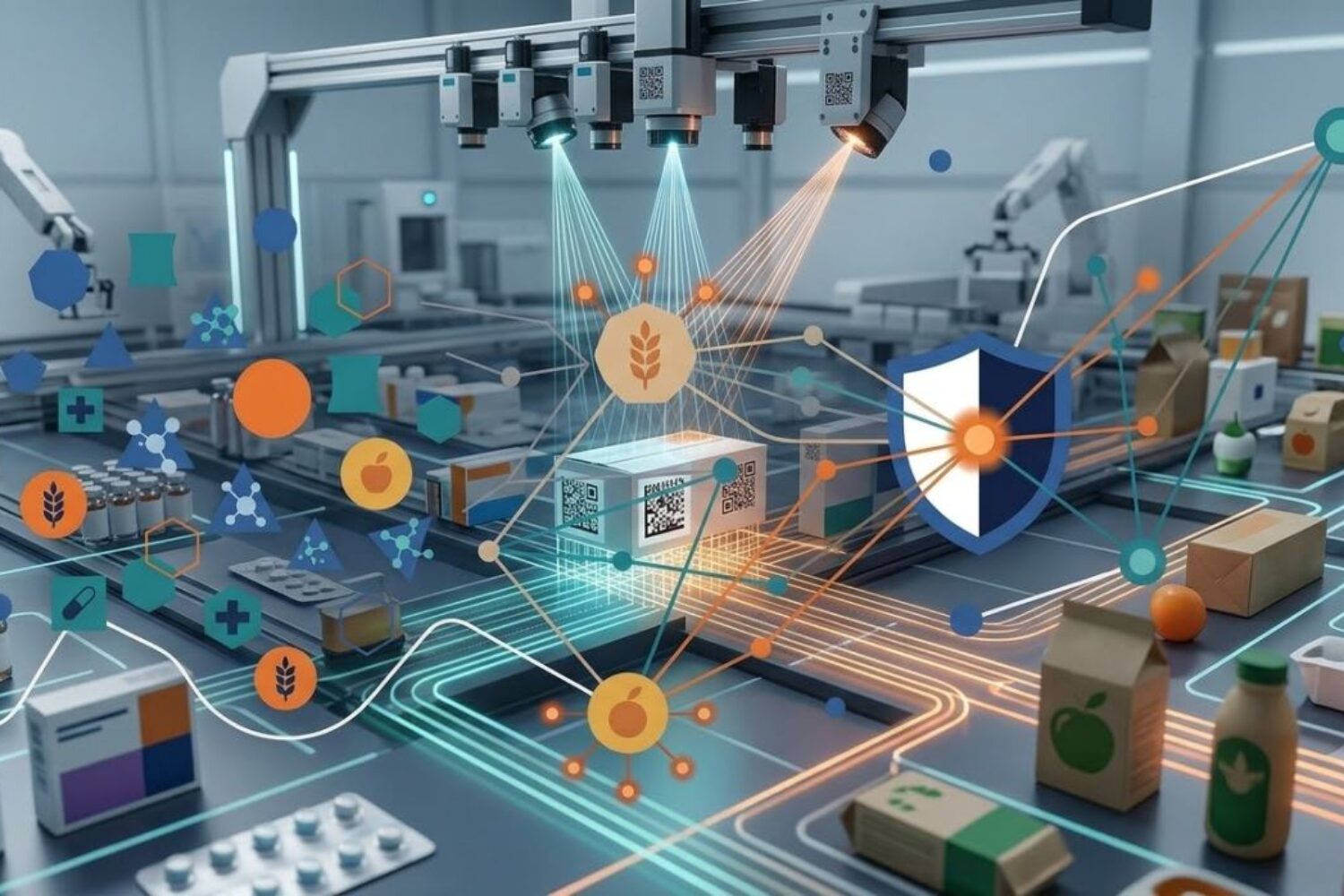
Many companies claim they are transitioning into the digital era. They launch a sleek website, build a mobile app, configure a conversational chatbot, or automate a handful of paper forms. But the deeper, more critical question is not whether a company utilizes digital tools.
The real question is: Has digital thinking fundamentally changed how your company creates, delivers, and protects value?
This is the urgent message at the heart of Digital Darwinism by Tom Goodwin. The book serves as a stark reminder that true digital disruption is never about chasing fashionable technology trends. It is about adapting deeply enough to survive when customer behaviors, underlying business models, and market regulations shift permanently beneath your feet.
For founders, this is a serious operational lesson. Digital transformation can easily become entirely cosmetic. A business can appear thoroughly modern from the outside while relying on outdated, analogue assumptions internally.
-
A pharmaceutical manufacturer might print a variable data code on a box without building true, end-to-end supply chain traceability.
-
A food brand may talk extensively about corporate transparency without establishing verifiable, item-level product history.
-
An industrial manufacturing facility might purchase an expensive smart machine without redesigning its daily production workflows around real-time data data.
Digital Darwinism is not about the survival of the largest or most well-funded enterprise. It is about the survival of the most adaptive.
In technology-driven sectors where ZAUQ Group, PHARMA TRAX, and FOOD TRAX operate, this challenge is immediate. We exist at the exact intersection where traditional manufacturing, strict regulatory compliance, consumer trust, and automated digital architecture merge. The market will not reward companies that merely decorate legacy systems with new software. It will reward those that redesign the system itself.
 The Trap of the “Bolted-On” Approach
 The Trap of the “Bolted-On” Approach
When disruptive technology emerges, a common defensive pattern occurs: companies instinctively try to attach the new tool to their old, comfortable habits. Instead of asking what the technology makes possible, they ask how it can preserve what they are already doing.
Goodwin strongly warns against this “bolted-on” approach—the superficial addition of technology to an un-optimized process without rethinking its core design.
| The Bolted-On Approach (Cosmetic) | Core Digital Reinvention (Infrastructure) |
| Deploying a basic chatbot over a broken customer support framework. | Restructuring client communication paths to preemptively solve friction points. |
| Digitizing physical paper documents into PDFs without changing the approval flow. | Re-engineering workflows to completely eliminate unnecessary data silos. |
| Printing a generic QR code on a box as structural packaging decoration. | Utilizing a Data Matrix to unlock true, serialized product identities and patient safety metrics. |
Bolting on technology feels safer because it provides the appearance of progress without forcing organizational discomfort. However, a digital add-on only impresses briefly; a completely redesigned experience builds lasting market value.
Challenging Deeply Entrenched Industry Assumptions
Real disruption changes the silent, foundational assumptions of an entire industry. Uber challenged the assumption that a transport provider must own physical vehicle fleets; Airbnb proved hospitality brands do not need to own hotel real estate.
As industrial and technology founders, we must ask: What core assumption in our market is ready to be challenged?
-
In Pharmaceutical Logistics: The historic assumption is that medicine packaging is merely a physical container. True digital thinking proves that every pack can function as a dynamic digital identity for real-time verification and automated compliance.
-
In the Food Supply Chain: The assumption is that consumer trust is built solely through long-term brand reputation. Modern data transparency proves that trust can be instantly verified through item-level batch data and proven Halal integrity.
-
On the Production Line: The legacy assumption is that quality inspection occurs after manufacturing defects happen. Advanced vision verification proves that quality can be actively controlled and corrected at the exact point of production.
Founder Field Note
 Founder Field Note
As a founder, I frequently witness technology being misunderstood by the wider market. Customers occasionally believe digital transformation is a transactional software purchase. Teams sometimes assume innovation is measured by compiling an endless list of product features.
But real digital change alters how decisions are made, how quality is verified, and how trust is structurally manufactured.
At ZAUQ Group, PHARMA TRAX, and FOOD TRAX, we do not view ourselves as software vendors or hardware suppliers. We are building the infrastructure for digitally trustworthy ecosystems.
-
Pharma serialization is far deeper than printing simple codes; it is the infrastructure for real-time recall readiness, patient safety, and regulatory data reporting.
-
Food traceability is not a marketing gimmick; it is an analytical foundation for supply chain discipline and authentic consumer communication.
-
Thermal Inkjet (TIJ) printing and automated vision inspection are not isolated hardware components; they are data collection nodes for highly transparent, predictive manufacturing.
If digital thinking does not enter your core operating model, it remains expensive decoration. Moving from compliance pressure to definitive competitive advantage requires building digital into your business DNA early.
How to Apply Digital Darwinism Today
-
Audit and Dismantle Bolted-On Tools: Identify one digital tool in your current setup. Did you genuinely optimize the underlying workflow, or did you just digitize an old, inefficient analog habit? If the process is broken, the software won’t fix it.
-
Uncover Real Operational Friction: Shift focus away from technology fashion. Ask: What specific trust gap, visibility roadblock, or decision-making delay are our customers currently facing? Build technology exclusively to remove that friction.
-
Establish absolute Data Responsibility: More data collection demands heightened ethical design. Formally review what data you collect, why you collect it, who secures it, and how it transparently adds undeniable value to the end user.
-
Commit to Continual Reinvention: Avoid treating transformation as a single project with a fixed end date. Build permanent team habits around analyzing shifting regulatory demands, testing small-scale models, and embedding agile digital capability directly into your everyday operations.
Key Ideas
 Key Ideas
-
Adaptation over scale: Survival in changing markets favors agility and deep system flexibility over sheer size or legacy funding.
-
Erase superficial features: True digital value is seamless, reducing human effort and removing friction automatically.
-
Self-disruption is mandatory: Leaders must possess the courage to invest in future digital platforms even if it applies pressure to their current revenue models.
-
Trust is the ultimate product: In highly regulated spaces tied to food safety and healthcare, robust digital trust is your primary value proposition.
Conclusion
Digital transformation is never about appearing modern; it is about remaining intensely adaptive. A company can deploy dashboards, configure AI automation, and generate QR codes while still executing strategies with a legacy mindset. That is the ultimate digital trap.
Do not allow digital tools to sit loosely on the edges of your business model. Use them to completely reinvent the core for the era that has already arrived.
The definitive metric: Are you merely using technology to decorate your past, or are you executing the digital architecture required to design your future?