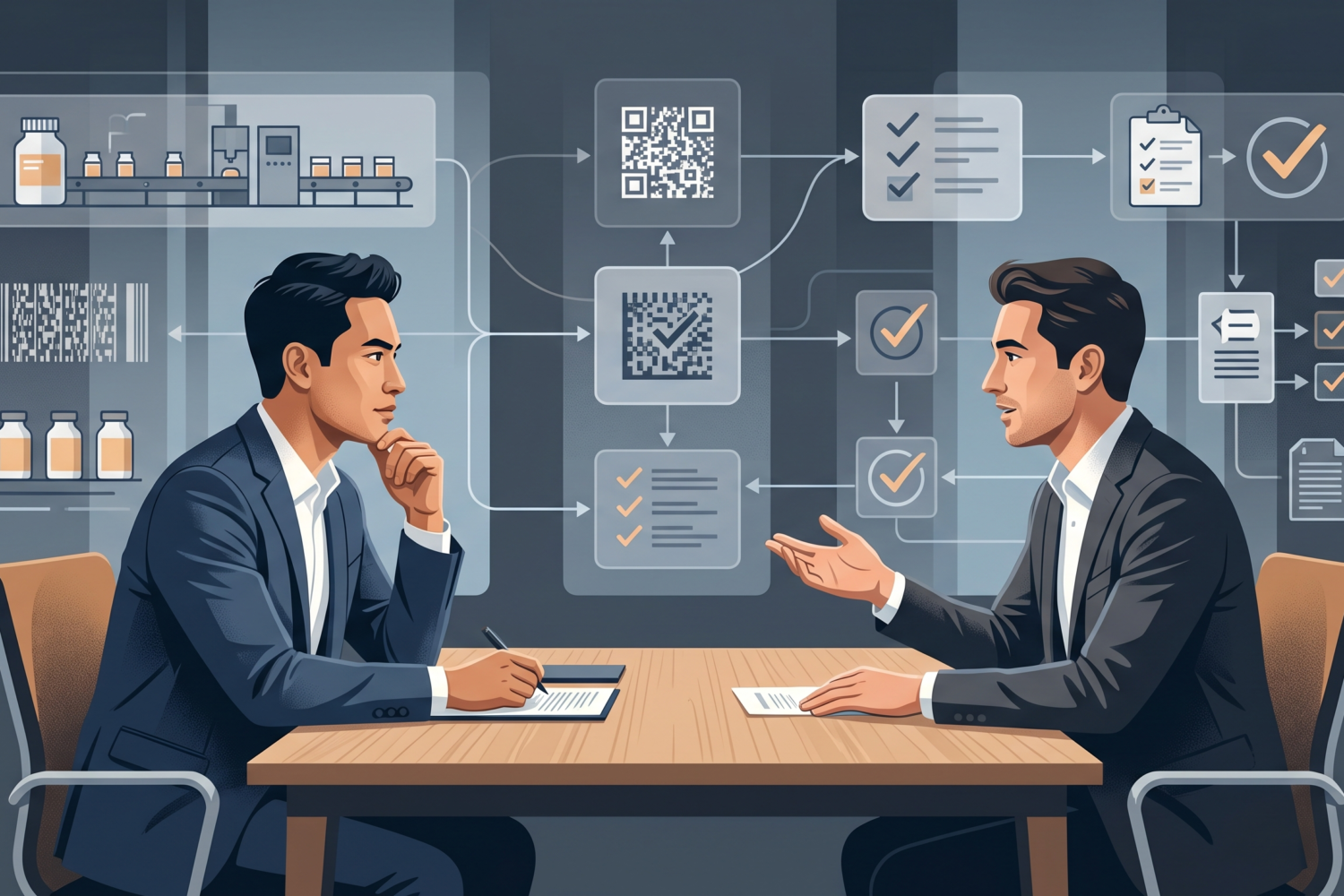
Sales is changing. Not because selling has become less important, but because customers have changed.
They are more informed, more selective, more aware of alternatives, and more sensitive to whether a seller truly understands their business reality. In the past, sales often depended on product knowledge, confidence, relationships, and persistence. Today, those qualities still matter—but they are not enough.
A founder, salesperson, or business leader must also learn faster. They must understand:
-
The customer’s current process
-
The buyer’s pressure
-
The industry language
-
The existing alternatives
-
The implementation risks
-
The objections behind the objection
-
The value the customer is actually trying to create
This is the central idea I took from Agile Selling by Jill Konrath. The book is not only about selling better; it is about learning better.
For a founder, this is a powerful concept. In technology-led businesses like ZAUQ Group, PHARMA TRAX, and FOOD TRAX, sales is not simply about explaining a product. It is about understanding customer trust, compliance pressure, production realities, regulatory expectations, and long-term operational confidence.
A good product may open the door, but learning earns the trust.
 What Is Agile Selling?
 What Is Agile Selling?
Agile selling is the ability to adapt quickly in changing sales environments. It means a salesperson does not depend only on old scripts, past experience, or fixed presentations. Instead, they continuously learn new products, shifting markets, evolving buyer behaviors, and new competitive realities.
Key Takeaway: Agile selling is sales built on fast learning.
This matters because sales conditions rarely remain stable. Markets shift, technology changes, and regulations evolve. The salesperson who cannot learn quickly becomes outdated quickly.
For founders, this idea goes beyond sales. A founder must be an agile learner, constantly absorbing feedback from customers, teams, markets, failures, and execution pressures.
Why Sales Is No Longer Only About Product Knowledge
Product knowledge is important, but it is no longer your primary differentiator. Customers can often find product information online, compare vendors, and study features long before meeting your sales team.
The customer does not need a human brochure; the customer needs a thinking partner.
A salesperson must help the buyer understand what problem they are really facing, what risk exists in their current process, and what value is being lost.
This is especially critical in B2B technology sales. When a pharma manufacturer considers serialization or aggregation, they aren’t just buying software or hardware. They are thinking about:
-
Packaging line impact and operator adoption
-
Data accuracy and DRAP compliance
-
Audit readiness and validation
-
Long-term operational reliability
Similarly, in food traceability, the core concern isn’t just the technology—it’s consumer trust, export readiness, Halal transparency, and supply chain control. Sales becomes meaningful only when the seller understands this wider context.
 Agile Learning: The Foundation of Modern Sales
 Agile Learning: The Foundation of Modern Sales
Agile learning is not random; it is the ability to absorb what matters quickly and apply it in the right situation.
Trying to master everything at once creates confusion. A better approach is structured learning using mental folders to organize critical insights:
-
Product Folder: Features, capabilities, and technical limits.
-
Customer Folder: Operational workflows and current baselines.
-
Industry Folder: Regulatory shifts, compliance timelines, and macro trends.
-
Objections Folder: Real concerns behind standard pushbacks.
-
Implementation Folder: Deployment realities, timeline risks, and training needs.
If learning remains informal, every salesperson repeats the same mistakes. If learning becomes structured, the whole team improves.
Building Situational Credibility
One of the strongest ideas in Konrath’s book is situational credibility—the ability to speak with a customer without sounding unaware of their daily reality. This doesn’t mean pretending to know everything; it means doing the deep preparation required to understand their environment.
-
In Pharma: This means speaking fluently about GS1 DataMatrix, batch-level operations, packaging line constraints, and recall readiness.
-
In Food Traceability: This means understanding supply chain visibility, QR-based product information, cold chain data, and export documentation.
Credibility is built before the meeting through disciplined preparation, listening, and studying the buyer’s reality.
Personalization vs. Standard Presentation
 Personalization vs. Standard Presentation
A standard presentation explains; a personalized conversation builds trust. Customers want to feel understood, not pitched to.
| Instead of saying… | Try opening the dialogue with… |
| “Our system supports serialization.” | “How are you currently managing product identity and compliance reporting across your packaging lines?” |
| “We offer end-to-end traceability.” | “Where does your team currently lose visibility between production, distribution, and customer verification?” |
The second approach creates dialogue, helps the customer think, and proves you are there to solve a problem rather than just push a product.
Founder Field Note
As a founder, I have learned that sales is not separate from leadership—it exposes the quality of your thinking. It shows whether your positioning is mature and whether your company has earned trust.
In high-stakes industries, we are not selling impulse products. We are discussing systems that affect patient safety, food safety, and long-term support. That kind of sale cannot be handled with surface-level confidence.
A customer may ask about pricing, but the deeper concern is implementation risk. They notice when we understand their language, come prepared, and show honesty about complexity. Over time, that disciplined preparation becomes your brand.
How to Apply Agile Selling Today
-
Create a Customer Learning Folder: Before your next meeting, document the customer’s current system, likely pain points, potential objections, and key decision-makers.
-
Ask One Status Quo Question: Ask, “How are you managing this process today?” and listen carefully. The answer reveals the true opportunity.
-
Prepare for the Hardest Question: Identify the most difficult technical or business question the customer could ask, and align on the answer before the meeting.
-
Set Learning Targets: Instead of only tracking sales volume, challenge your team to master a specific area of objection handling or industry compliance each week.
-
Debrief Every Meeting: After key conversations, ask your team: What did we learn? What surprised us? What did the customer care about most?
Key Takeaways
-
Agile selling is the ability to learn quickly in changing environments.
-
Product knowledge matters, but customer understanding matters more.
-
Preparation is a fundamental form of respect.
-
Daily improvement is more powerful than occasional motivation.
-
The ultimate goal is to learn fast enough to truly deserve the sale.
Conclusion
Sales is not about persuasion; it is about learning. The strongest salespeople are not always the ones who speak the most—they are the ones who understand the customer fastest.
For founders, this lesson matters deeply. We are asking customers to believe in a better way of working. That belief cannot be forced; it must be earned. And earning it always begins with learning.
The final question to consider: Are we trying to sell faster, or are we learning fast enough to deserve the sale?