
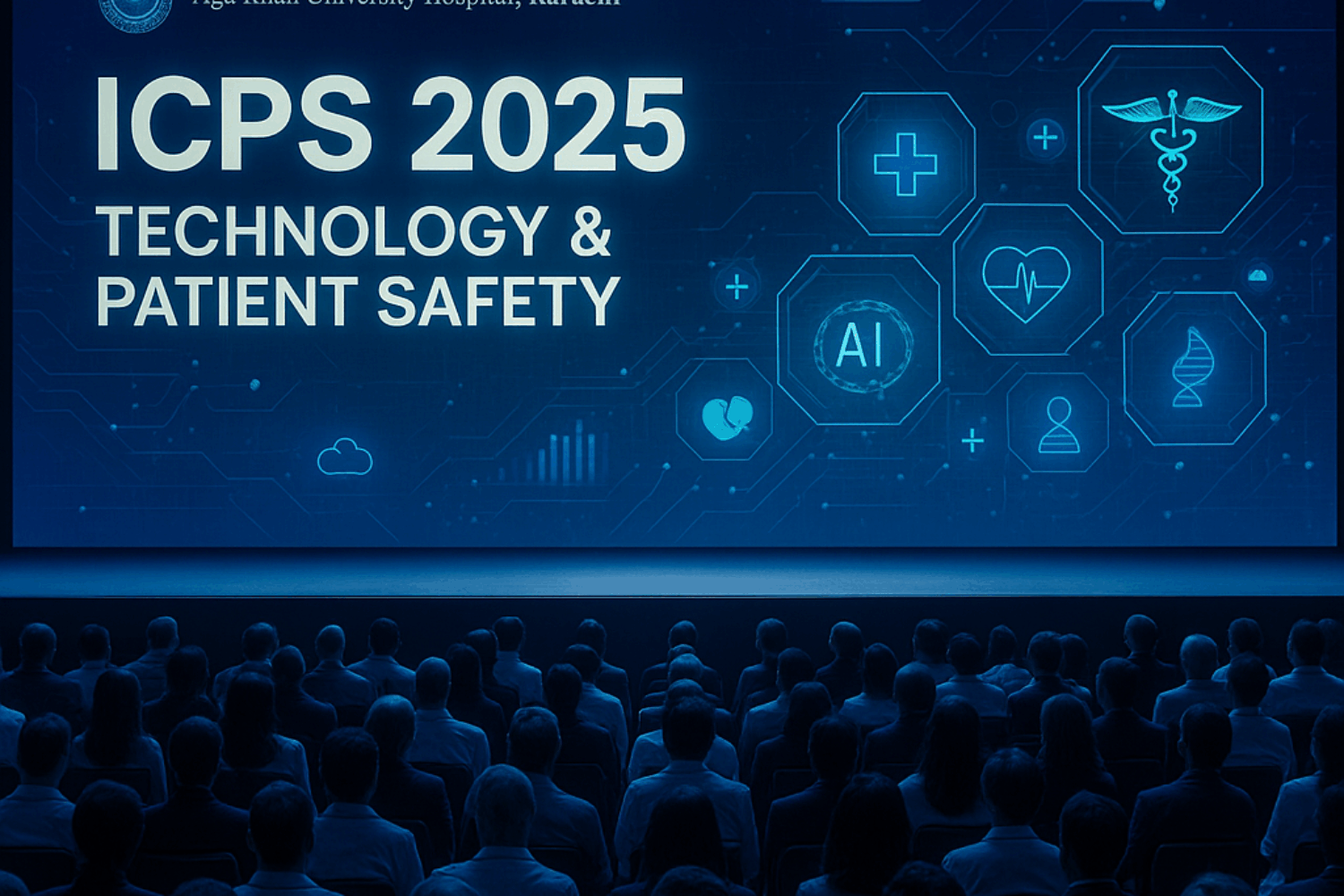
- The Momentum of Safety in a Digital Age
The 8th International Conference on Patient Safety (ICPS 2025), hosted by the Aga Khan University Hospital (AKUH) in collaboration with Riphah International University, marked a defining moment for Pakistan’s healthcare transformation.
The theme — Technology and Patient Safety — was not just a topic; it was a statement of intent.

Across two days, the conversations bridged technology, ethics, and human empathy. Leaders from WHO, ISQua, Riphah, and AKUH examined how digital health, automation, and artificial intelligence can make care not only faster and smarter, but also safer.
- A Confluence of Minds and Missions
The conference brought together global patient-safety pioneers such as
Sir Dr. Mike Durkin, Prof. Dr. Paul Barach, Prof. Dr. Peter Lachman, and Dr. Abdulelah Alhawsawi, alongside Pakistan’s visionary clinicians and policymakers.
Their shared message was clear: technology must serve human care, not replace it.
From policy regulators like DRAP to hospital leaders from AKUH, Indus Health, Tabba Heart Institute, and Riphah Healthcare Services, the dialogue revolved around system-level safety — from diagnostic accuracy to digital accountability.
- Learning Through the Lens of Innovation
The sessions were structured to explore every layer of safety transformation:
Technology & Patient Safety:
Showcased Pakistan’s innovators redefining digital infrastructure for hospitals and pharmaceutical systems.

Medication Safety:
Stressed traceability, pharmacovigilance, and the prevention of errors at the point of dispense a theme that resonates deeply with Pharma Trax’s mission.

AI & Remote Monitoring:
Explored how data dashboards and predictive analytics can move healthcare from reactive to preventive.

Nursing Innovation:
Illustrated how empowered nursing teams are central to sustaining technology-driven safety.

Policy & Standards:
Reflected on Pakistan’s evolving frameworks aligned with WHO and ISQua standards.

Academic Integration:
Discussed embedding patient-safety curricula in undergraduate and postgraduate programs.

- What the Future Demands
A powerful takeaway was that technology alone doesn’t ensure safety — culture does.
Every presentation underscored the importance of leadership, reporting systems, and a learning mindset within institutions.
For me, it reaffirmed the bridge between digital health transformation and pharmaceutical traceability.
At Pharma Trax, our work on serialization, verification, and recall intelligence is fundamentally about patient safety — ensuring that what reaches a patient is authentic, effective, and traceable.
In the same way, ZAUQ Health’s focus on AI-driven decision support and EMR integration complements the national drive toward one-patient-one-record and zero harm initiatives.
- Recognizing Excellence and Collaboration
The launch of the Dr. Tahir Shamsi Patient Safety Research Award and the Rufaida Al-Aslamia Champion Award highlighted Pakistan’s growing commitment to celebrate those shaping the safety culture.
Beyond awards, the event became a living lab for ideas — a collaborative ecosystem where policymakers, healthcare executives, technologists, and educators met not as silos but as partners in reform.
- My Reflection
Walking through the sessions, I sensed a quiet transformation.
Pakistan’s healthcare conversation is evolving — from compliance to innovation, from error reduction to outcome optimization.
For those of us building digital safety infrastructure, this conference was a reminder that our technology is meaningful only when it protects human life.
As I left the AKUH auditorium, I carried one thought:
 “The next frontier of patient safety lies in intelligent systems that think, learn, and protect — but remain human at heart.”